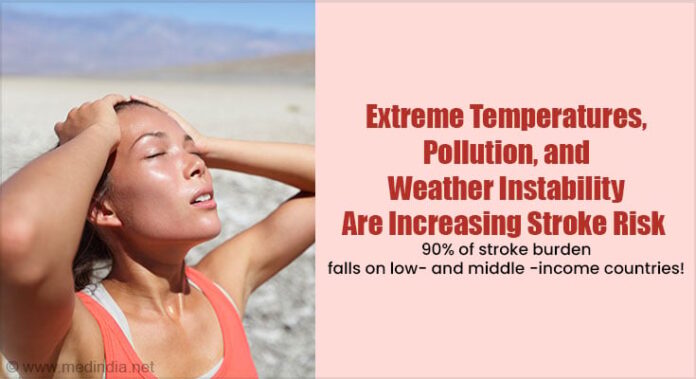
Climate change is emerging as a major risk factor for stroke. Experts explain how heat, pollution, and weather fluctuations affect brain health and increase stroke risk.
- Climate change factors like heat, cold, and pollution are linked to increased stroke risk
- Air pollution and temperature fluctuations can damage blood vessels and trigger stroke events
- Vulnerable populations face a higher risk due to reduced ability to adapt to environmental stress
Climate change is now being recognized as a serious risk factor for stroke, according to a scientific statement by the World Stroke Organisation, published in the International Journal of Stroke (1✔ ✔Trusted Source
Stroke and climate change: A World Stroke Organization scientific statement
Go to source
).
The report highlights how environmental changes, especially extreme temperatures, pollution, and weather instability, are increasingly linked to both stroke occurrence and mortality.
Stroke remains one of the leading causes of death and disability worldwide, with nearly 90% of the burden affecting low- and middle-income countries.
How Climate Change Increases Stroke Risk
Climate-related factors affect the body in multiple ways, particularly the blood vessels and brain circulation. Extreme heat can cause dehydration and increase blood viscosity, while cold exposure can raise blood pressure and increase vascular stress. Changes in humidity and atmospheric pressure can destabilize blood flow, while air pollution damages blood vessels through inflammation. Together, these effects increase the likelihood of both ischemic strokes (caused by blood clots), and hemorrhagic strokes(caused by vessel rupture).
| Environmental Factor | How It Affects the Body | Stroke Impact |
|---|---|---|
| Extreme heat | Dehydration, thicker blood | Higher clot risk |
| Cold temperatures | Increased blood pressure | Higher stroke incidence |
| Temperature variability | Vascular stress | Increased admissions |
| Air pollution (PM2.5) | Inflammation, vessel damage | Higher stroke risk & mortality |
| Humidity & pressure shifts | Blood pressure fluctuations | Trigger stroke events |
| Wildfires & dust storms | Toxic particle exposure | Short-term spike in strokes |
The evidence shows that stroke risk is not linked to a single factor, but rather to combined environmental stressors,.
Rising Temperatures and Increasing Stroke Risk
While cold exposure has traditionally been associated with stroke risk, rising global temperatures are now emerging as a growing concern. Heat exposure can reduce hydration, increase blood viscosity, and place additional strain on the cardiovascular system. Even small increases in average temperature can translate into significant health impacts, particularly through more frequent and intense extreme weather events.
Impact of Air Pollution on Stroke Risk
Air pollution is one of the strongest contributors to stroke risk. Fine particulate matter (PM2.5) can enter the bloodstream through the lungs, triggering inflammation and damaging blood vessel walls. These changes increase the risk of blocked arteries, worsen stroke severity, and lead to poorer recovery outcomes. The report highlights that air pollution accounts for a substantial share of the global stroke burden.
Why Weather Changes Matter More Than You Think
It is not just extreme weather but rapid changes that increase risk. Fluctuations in temperature, humidity, and barometric pressure can destabilize circulation and trigger stroke events.
In fact, the study emphasizes that “compound weather events”, such as heat combined with humidity, can have additive or even amplified effects on stroke risk.
Who Is Most at Risk?
Certain groups are more vulnerable to climate-related stroke risk:
- Older adults
- People with hypertension or diabetes
- Outdoor workers exposed to extreme weather
- Populations in low-resource settings
These groups have reduced ability to adapt to environmental stress, increasing their risk of both stroke and complications.
Why Climate Change Is a Public Health Concern
The report describes climate change as a “threat multiplier,” meaning it worsens existing health risks. It affects:
- Access to healthcare
- Medication availability
- Nutrition and living conditions
This creates a cycle in which vulnerable populations face greater exposure and worse outcomes.
Strategies to Reduce Climate-Related Stroke Risk
Experts recommend both individual and system-level action.
At the individual level:
- Stay hydrated during heat
- Avoid extreme temperature exposure
- Monitor blood pressure
- Reduce exposure to polluted air
At the system level:
- Reduce greenhouse gas emissions
- Improve air quality
- Integrate climate alerts into healthcare systems
- Strengthen public health preparedness
What This Means for Public Health and Prevention
Climate change is not just an environmental issue; it is an emerging health risk with direct effects on brain and vascular health. As evidence grows, understanding how environmental factors influence stroke risk is essential for both prevention and public health planning.
Frequently Asked Questions
Q: Can climate change increase stroke risk?
A: Yes, factors like heat, pollution, and weather variability can increase stroke risk.
Q: How does heat cause stroke?
A: Heat can lead to dehydration and thicker blood, increasing the risk of clots.
Q: Does air pollution affect brain health?
A: Yes, air pollution damages blood vessels and increases stroke risk.
Q: Who is most vulnerable to climate-related stroke?
A: Older adults, people with chronic diseases, and those exposed to extreme environments.
Q: Can stroke risk increase even without extreme weather?
A: Yes, even fluctuations in temperature and pressure can trigger stroke events.
Reference:
- Stroke and climate change: A World Stroke Organization scientific statement – (https://journals.sagepub.com/doi/epub/10.1177/17474930261436535)
Source-Medindia