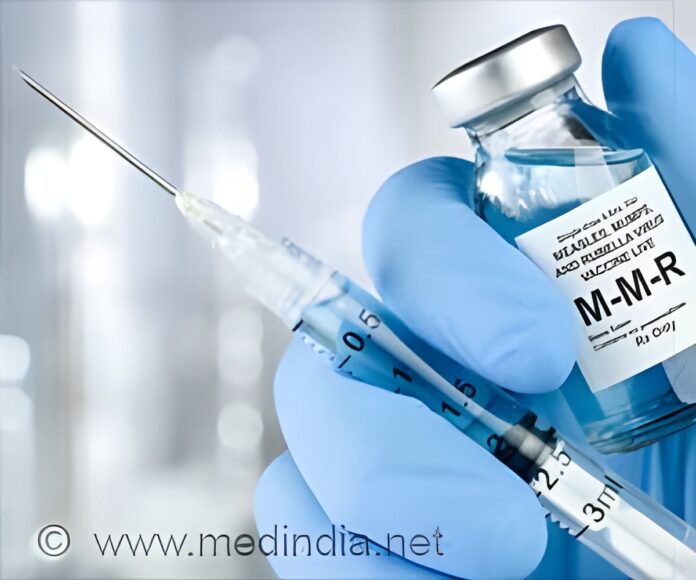
Bangladesh is facing one of its worst measles outbreaks in decades as rising child deaths and vaccine disruptions raise concerns across South Asia, including neighboring India.
Bangladesh is witnessing a rapidly worsening measles outbreak that has now claimed more than 400 lives, with children accounting for the overwhelming majority of cases and deaths(1✔ ✔Trusted Source
Nationwide Response Mobilized to Contain Measles Outbreak in Bangladesh
Go to source
).
Health authorities say the outbreak is spreading aggressively across the country amid vaccine shortages, declining immunization coverage, and widening immunity gaps among young children.
According to Bangladesh’s Directorate General of Health Services, nine more deaths were reported within the last 24 hours alone, pushing the combined death toll from confirmed measles and measles-related symptoms to 424.
Three of the latest deaths were laboratory-confirmed measles cases, while six children died with measles-like symptoms. Officials said all three confirmed deaths were reported from the Dhaka division.
The country also recorded 87 new confirmed infections and more than 1,100 suspected measles cases during the same period.
The outbreak is raising concerns beyond Bangladesh because measles is one of the most contagious viral diseases in the world and can spread rapidly across bordersthrunvaccinated populations and international travel.
According to the Centers for Disease Control and Prevention, an estimated 10.3 million measles infections occurred globally in 2023, and outbreaks are now occurring across every region of the world(2✔ ✔Trusted Source
Global Measles Outbreaks
Go to source).
India has also reported rising measles case counts in recent months.
According to provisional surveillance data cited by the CDC and the World Health Organization, India recorded approximately 15,750 measles cases between September 2025 and February 2026, ranking it among the countries with the highest measles burden globally.
Why Is Bangladesh Facing Such a Severe Measles Outbreak?
Public health experts say the current outbreak is largely being driven by declining routine immunization coverage, vaccine shortages, and disruptions in vaccination campaigns over the past two years.
According to the World Health Organization, measles transmission has now spread across 58 of Bangladesh’s 64 districts, affecting all eight divisions of the country(3✔ ✔Trusted Source
Measles – Bangladesh
Go to source).
WHO said around 79% of reported cases involved children younger than five years, with the highest burden seen among children under two years of age and infants younger than nine months.
Health officials say mortality has been concentrated largely among unvaccinated children, exposing major immunity gaps in recent birth cohorts.
Researchers writing in The BMJ described the outbreak as “entirely preventable,” arguing that prolonged political instability, vaccine procurement delays, healthcare workforce shortages, and disrupted immunization campaigns helped create the current crisis(4✔ ✔Trusted Source
Measles is resurging in Bangladesh—but this outbreak was entirely preventable
Go to source).
According to the BMJ report:
- Bangladesh maintained measles-rubella vaccine coverage between 90% and 95% for years after introducing the combined vaccine in 2012
- A nationwide measles-rubella vaccination campaign scheduled after 2020 did not occur
- Political unrest between 2024 and 2026 disrupted vaccination activities
- Delays in vaccine procurement and funding created major vaccine shortages
- Nearly 45% of healthcare worker positions were reportedly vacant in many districts during 2025
WHO further noted that nationwide stock outs of measles-rubella vaccines during 2024 and 2025, combined with declining routine immunization and the absence of nationwide supplementary campaigns since 2020, significantly increased the number of susceptible children.
Health authorities also warned that the recent festive season and high population movement accelerated spread across densely populated urban areas and border regions.
How Is Bangladesh Trying to Control the Measles Emergency?
Bangladesh has now launched an aggressive nationwide response to contain the outbreak, focusing heavily on emergency vaccination campaigns, surveillance expansion, hospital preparedness, and outbreak control measures.
According to the World Health Organization, Bangladesh began a phased nationwide measles-rubella vaccination campaign on 5 April 2026 targeting children aged 6 to 59 months in high-incidence districts.
The campaign initially targeted 1.2 million children across 18 high-risk districts before expanding to additional urban centres and other upazilas nationwide. Authorities aim to complete the nationwide campaign by 21 May 2026.
To strengthen outbreak response, officials have:
- Activated rapid response teams
- Expanded laboratory surveillance
- Increased hospital preparedness
- Strengthened isolation facilities
- Accelerated vaccine procurement
- Enhanced infection prevention measures
Vitamin A supplementation is also being provided to all suspected and confirmed measles cases because it can reduce the severity of complications associated with measles infection.
WHO said Bangladesh is also strengthening nationwide surveillance systems and epidemiological analysis to improve case detection and reporting.
Trainings are being conducted at healthcare facilities to improve identification of measles symptoms and reporting accuracy.
The WHO and partners including UNICEF are currently supporting Bangladesh through technical assistance, operational planning, vaccination logistics, and outbreak coordination.
Could the Bangladesh Outbreak Increase Regional Measles Risks?
Health authorities warn that Bangladesh’s outbreak now carries significant regional implications because measles spreads extremely easily among unvaccinated populations and can rapidly cross borders through population movement and international travel.
According to the World Health Organization, the regional risk across South-East Asia is currently considered high because Bangladesh shares extensive land borders with India and Myanmar, both of which have vulnerable populations and ongoing measles transmission risks.
WHO specifically warned that:
- High population mobility across the Bangladesh-India border may facilitate continued transmission
- Densely populated urban hubs increase spread potential
- Vulnerable unvaccinated populations remain at risk
- Cross-border travel may accelerate regional outbreaks
The organization noted that India, despite relatively high overall vaccination coverage, has still reported increasing measles case counts over the past six months. Major border areas and transportation hubs may therefore remain vulnerable to imported infections.
WHO also emphasized that measles can quickly reverse years of progress toward elimination when immunity gaps develop. The outbreak is now seen as a warning of how fragile vaccination gains can become when routine immunization systems weaken.
Experts say immediate priorities now include:
- Restoring routine vaccination services
- Rapidly closing immunity gaps
- Expanding surveillance systems
- Improving outbreak preparedness
- Reducing vaccine hesitancy
- Preventing further cross-border spread
Public health specialists warn that unless vaccination coverage is restored quickly and consistently, measles outbreaks may continue spreading across vulnerable communities throughout South Asia.
References:
- Nationwide Response Mobilized to Contain Measles Outbreak in Bangladesh – (https://www.who.int/southeastasia/news/detail/15-04-2026-response-measlesBN)
- Global Measles Outbreaks – (https://www.cdc.gov/global-measles-vaccination/data-research/global-measles-outbreaks/index.html)
- Measles – Bangladesh – (https://www.who.int/emergencies/disease-outbreak-news/item/2026-DON598)
- Measles is resurging in Bangladesh—but this outbreak was entirely preventable – (https://www.bmj.com/content/393/bmj.s819)
Source-Medindia