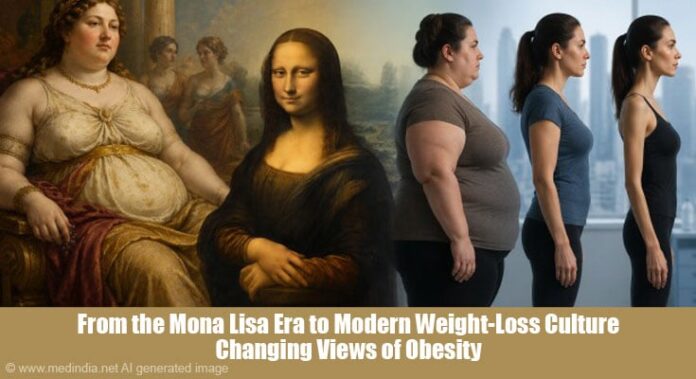
A presentation at ECO 2026 suggests historical art may help doctors better understand obesity stigma and deliver more empathetic patient care.
- Experts say historical art may help doctors better understand obesity stigma
- Obesity was once widely associated with beauty, fertility, wealth, and power
- Researchers warn that weight stigma can worsen mental health and healthcare outcomes
For centuries, larger bodies were often celebrated in paintings, sculptures, and royal portraits as symbols of beauty, fertility, prosperity, and power.
Now, a pediatric endocrinologist speaking at the European Congress on Obesity (ECO 2026) says revisiting that history may help modern doctors better understand obesity stigma and become less judgmental toward patients living with obesity.
Dr. Michael Yafi of the University of Texas Health Science Center at Houston used examples from art history to argue that society’s view of obesity has dramatically changed over time.
He suggested that understanding these cultural shifts could encourage more empathy in healthcare and improve patient care.
Unlike a published clinical study, the presentation was an expert perspective shared at the conference, drawing connections between art, medicine, obesity stigma, and changing body ideals.
Yafi also speculated that the facial changes linked to rapid weight loss from GLP-1 drugs such as Wegovy and Mounjaro — often called “GLP-1 face” or “Ozempic face” — may eventually become part of future artistic representation, much like larger bodies appeared throughout historical art.
Why Were Larger Bodies Once Seen as Symbols of Beauty and Power?
According to Dr. Yafi, obesity was viewed very differently for much of human history. In earlier societies, body fat often represented wealth, social status, fertility, abundance, and physical strength rather than poor health.
One of the oldest examples he referenced was the Venus of Willendorf, a small stone figurine estimated to be around 24,000 to 32,000 years old.
The sculpture depicts a woman with exaggerated hips, breasts, and abdominal fat, features many historians believe symbolized fertility and survival during times when food scarcity was common.
Yafi also pointed to religious artwork from the Middle Ages, where angels and children were often painted with rounded bodies and visible folds of skin, reflecting the idea that fullness represented prosperity and well-being.
The association between obesity and power has repeatedly appeared throughout history. Yafi noted that research from Turkey found that 29 of 36 Ottoman emperors between 1258 and 1926 were described or portrayed as having abdominal obesity.
During the European Renaissance, artists such as Rubens and Renoir frequently painted women with fuller figures, who were considered the ideals of beauty at the time. In Greek mythology, Pluto, the god associated with wealth, was also often portrayed as obese.
Yafi argued that these historical portrayals reveal how strongly cultural standards shape perceptions of body weight.
What Did Dr. Yafi Say About the Mona Lisa and Pregnancy Weight Gain?
One of the most widely discussed parts of Yafi’s presentation involved Leonardo da Vinci’s Mona Lisa.
According to Yafi, Lisa Gherardini, the woman believed to be the subject of the famous painting,appears to have excess body fat. Some historians have previously speculated that she may have had a lipid metabolism disorder, meaning her body may have processed fat differently.
However, Yafi suggested a simpler explanation may be more realistic: pregnancy-related weight gain.
He pointed out that Lisa Gherardini had already given birth to four children by the time the portrait was painted, and that pregnancy-related body changes could explain her appearance more plausibly than disease.
Yafi also referred to paintings of composers Johann Sebastian Bach and George Frideric Handel, both of whom were often portrayed with larger bodies.
He suggested that their later-life vision problems may possibly have been linked to type 2 diabetes, though this remains speculative rather than medically confirmed.
The broader point of his presentation was not to diagnose historical figures, but to show how body size was interpreted differently across eras.
When Did Society Begin Stigmatizing Obesity?
According to Yafi, perceptions of obesity changed dramatically during the second half of the 20th century, especially after growing medical evidence linked diets high in saturated fat with obesity, metabolic disease, cardiovascular disease, and diabetes.
As public health messaging evolved, thinner body types increasingly became associated with beauty, discipline, health, and success. At the same time, obesity gradually became more stigmatized socially and medically.
Researchers say this shift also became amplified through:
- Fashion and advertising industries
- Film and television
- Celebrity culture
- Social media
- Public health campaigns
- News media representations
Modern obesity stigma is now increasingly recognized as a major public health issue itself, which is one reason experts like Dr. Yafi believe historical perspectives on body weight may help encourage more empathy in healthcare.
Supporting this broader concern, a review published in Current Obesity Reports explained that obesity stigma is fueled partly by the inaccurate belief that body weight is entirely under personal control.
Researchers emphasized that obesity actually results from a complex interaction of genetic, biological, environmental, psychological, and social factors (1✔ ✔Trusted Source
Historical Perspectives of Obesity Through Art
Go to source).
The review noted that obesity stigma remains widespread across:
- Entertainment media
- Advertising
- Healthcare settings
- Politics and public health messaging
- Social media platforms
Researchers warned that this stigma can cause serious psychological, physical, and social harm.
How Does Obesity Stigma Affect Mental Health and Healthcare?
Experts increasingly say obesity stigma does not motivate healthier behavior as many people assume. Instead, research suggests it may worsen both physical and mental health outcomes.
The Current Obesity Reports review found that obesity stigma is associated with:
- Depression and anxiety
- Poor body image
- Reduced healthcare access
- Increased stress
- Social discrimination
- Worse physical health outcomes
Researchers also reported that many healthcare professionals themselves carry implicit or explicit weight bias, sometimes assuming people with obesity are lazy, non-compliant, or personally responsible for their condition.
This can affect:
- Quality of medical consultations
- Time spent with patients
- Diagnostic decisions
- Communication style
- Willingness of patients to seek care
Reflecting these growing concerns, an obesity care guideline published by the American Diabetes Association’s Obesity Association similarly warned that weight stigma can reduce healthcare quality and discourage patients from seeking medical support (2✔ ✔Trusted Source
Obesity Stigma: Causes, Consequences, and Potential Solutions
Go to source
).
The guideline recommended:
- Training doctors on weight bias
- Using non-judgmental language
- Creating more inclusive clinical environments
- Recognizing obesity as a complex disease rather than a personal failure
Researchers say empathy-focused care may improve both trust and long-term treatment outcomes for people living with obesity.
Why Are Body Image Pressures Becoming More Complex Today?
While historical art often idealized fuller bodies, modern beauty standards have changed dramatically under the influence of globalization, media, celebrity culture, and social platforms.
Researchers say these shifting ideals are now affecting body image perceptions across societies worldwide, including in India.
Reflecting this broader trend, a review exploring body image dissatisfaction in rural India found that media pressure, beauty standards, and social expectations now strongly shape how people perceive body image and attractiveness (3✔ ✔Trusted Source
Weight stigma and bias: standards of care in overweight and obesity-2025
Go to source).
The review noted that:
- Thin body ideals promoted through the media increase body dissatisfaction
- Social pressure and peer criticism affect self-esteem
- Body image concerns are linked to anxiety and depression
- Cultural beauty standards continue to evolve rapidly
Researchers emphasized that body image dissatisfaction now affects people across genders, ages, and socioeconomic groups, including in rural communities where traditional and modern beauty standards increasingly overlap.
This changing landscape may also help explain growing conversations around “GLP-1 face,” a term used to describe the gaunt facial appearance that can occur after rapid weight loss with GLP-1 medications.
Could “GLP-1 Face” Become Part of Future Art and Culture?
Yafi suggested that the cultural conversation around rapid weight loss drugs may eventually influence future artistic representation just as older beauty standards influenced historical art.
GLP-1 drugs such as Wegovy, Ozempic, and Mounjaro have become increasingly popular worldwide because of their strong weight-loss effects.
However, rapid fat loss can sometimes lead to visible facial volume loss, wrinkles, looser skin, and a more hollow appearance — changes now popularly described online as “Ozempic face” or “GLP-1 face.”
A review in Plastic and Reconstructive Surgery Global Open noted that these facial and body changes are now widely discussed on social media and in cosmetic surgery settings (4✔ ✔Trusted Source
Exploring Body Image Dissatisfaction and Psychiatric Co-morbidities in Rural India: A Comprehensive Review
Go to source).
Researchers explained that the explosive popularity of GLP-1 drugs has already begun influencing:
- Beauty trends
- Cosmetic procedures
- Social media culture
- Plastic surgery consultations
- Public discussions around body image
Yafi speculated that if these medications continue reshaping physical appearance on a large scale, artists of the future may begin depicting these newer body and facial changes just as artists in earlier centuries painted fuller bodies as ideals of beauty and prosperity.
At the center of his message was a broader idea: body ideals constantly change across history, culture, medicine, and society. Understanding that history, he argues, may help doctors move away from judgment and toward more empathetic, patient-centered obesity care.
Frequently Asked Questions
Q: What is obesity stigma?
A: Obesity stigma refers to negative attitudes, stereotypes, or discrimination directed toward people because of their body weight.
Q: Why did larger bodies once symbolize beauty and power?
A: In many historical societies, larger bodies were associated with wealth, fertility, prosperity, and abundance during times when food scarcity was common.
Q: What is “GLP-1 face” or “Ozempic face”?
A: It refers to the facial volume loss and gaunt appearance that can occur after rapid weight loss with GLP-1 drugs like Wegovy and Ozempic.
Q: How can obesity stigma affect healthcare?
A: Researchers say weight stigma may reduce healthcare quality, affect doctor-patient communication, and discourage people from seeking medical care.
Q: Why are body image pressures increasing today?
A: Experts say media, celebrity culture, globalization, and social platforms are strongly shaping modern beauty standards and body image expectations.
References:
- Historical Perspectives of Obesity Through Art – (https://pubmed.ncbi.nlm.nih.gov/40102323/)
- Obesity Stigma: Causes, Consequences, and Potential Solutions – (https://pmc.ncbi.nlm.nih.gov/articles/PMC9985585/)
- Weight stigma and bias: standards of care in overweight and obesity-2025 – (https://drc.bmj.com/content/13/Suppl_1/e004962)
- Exploring Body Image Dissatisfaction and Psychiatric Co-morbidities in Rural India: A Comprehensive Review – (https://pmc.ncbi.nlm.nih.gov/articles/PMC10899117/)
- Injectable Weight Loss Medications in Plastic Surgery: What We Know, Perioperative Considerations, and Recommendations for the Future – (https://pmc.ncbi.nlm.nih.gov/articles/PMC10807879/)
Source-Medindia