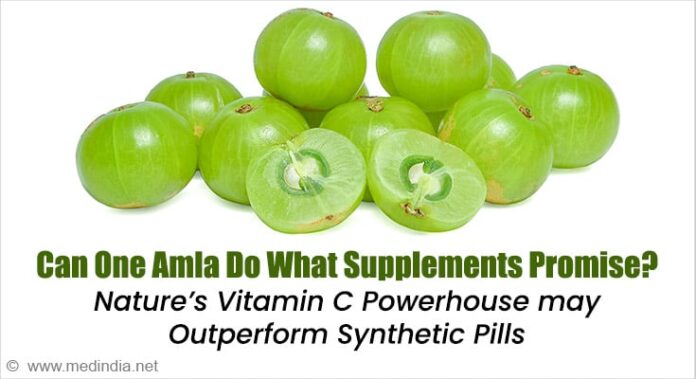
Scientific evidence suggests amla may rival synthetic supplements by delivering stable vitamin C, antioxidants, and metabolic benefits through whole food nutrition.
- Amla delivers heat-stable vitamin C with higher bioavailability
- Whole-fruit antioxidants work synergistically, unlike isolated pills
- Regular intake supports immunity, digestion, and metabolic balance
The modern wellness market is dominated by pills, powders, and fortified products claiming to boost immunity, digestion, and overall health. However, emerging scientific evidence suggests that amla (Emblica officinalis), commonly known as Indian gooseberry, may provide comparable or even broader health benefits than many synthetic supplements when consumed as a whole food (1✔ ✔Trusted Source
Amla (Emblica officinalis Gaertn), a wonder berry in the treatment and prevention of chronic diseases.
Go to source
).
Amla has been used traditionally for centuries, and current research increasingly supports its role as functional food rich in protective bioactive compounds.
Amla is naturally high in vitamin C, polyphenols, flavonoids, and tannins, which together contribute to its strong antioxidant and anti-inflammatory properties.
TOP INSIGHT

Did You Know?
Just one small #Amla can deliver antioxidant power equivalent to multiple synthetic supplements because its natural #VitaminC stays stable even after cooking.
#amlabenefits #gooseberry #naturalnutrition #antioxidants #guthealth #immunity #medindia
Natural Vitamin C Stability Compared with Supplements
Vitamin C is essential for immune defense, collagen synthesis, iron absorption, and tissue repair. Synthetic vitamin C supplements, however, are prone to oxidation when exposed to heat, light, or prolonged storage.
Research shows that vitamin C in amla remains highly stable because it is naturally bound with tannins and polyphenols. These compounds protect ascorbic acid from degradation, allowing it to retain biological activity even after drying or cooking.
Studies indicate that this natural stabilization improves vitamin C bioavailability and prolongs antioxidant action compared to isolated supplement forms.
Antioxidant and Anti-Inflammatory Effects
Oxidative stress occurs when free radicals overwhelm the body’s defense systems, accelerating aging and increasing the risk of chronic diseases such as cardiovascular disease, diabetes, and neurodegenerative disorders.
Experimental and human studies demonstrate that amla significantly reduces oxidative stress markers and inflammatory mediators. Unlike single-nutrient supplements, the antioxidants in amla work together across multiple cellular pathways, offering broader protection.
This synergistic action explains why whole-food sources often show stronger biological effects than isolated antioxidant supplements.
Gut Health and Metabolic Support
Digestive health plays a central role in immunity and metabolic regulation. Evidence suggests that amla supports gut lining integrity, improves digestion, and promotes a healthier gut microbial environment.
Clinical studies have also reported improvements in lipid profiles, including reductions in low density lipoprotein cholesterol, along with better glycemic control in individuals consuming amla regularly.
These benefits are attributed to its polyphenols and fiber content, which help regulate glucose absorption, insulin sensitivity, and lipid metabolism (2✔ ✔Trusted Source
Phytochemistry, pharmacology and medicinal properties of Emblica officinalis.
Go to source).
Whole Food Nutrition Versus Isolated Supplements
Dietary supplements deliver isolated nutrients that target limited biochemical pathways. In contrast, amla provides a complex matrix of bioactive compounds that enhance nutrient absorption and biological effectiveness.
Experts emphasize that while supplements may be necessary in specific deficiency states, whole foods like amla offer broader, more sustainable health benefits when included in daily diets.
Scientific evidence increasingly supports amla as a powerful natural alternative to many synthetic supplements. By delivering stable vitamin C, potent antioxidants, and metabolic support in a single whole food, amla highlights the value of food-based nutrition for long-term health and disease prevention.
References:
- Amla (Emblica officinalis Gaertn), a wonder berry in the treatment and prevention of cancer.
– (https://europepmc.org/article/med/21317655) - Phytochemistry, pharmacology and medicinal properties of Emblica officinalis. – (https://pubmed.ncbi.nlm.nih.gov/25491539/)
Source-Medindia