Mood disorders are often recurrent. For many people with depression or bipolar disorder, recovery is not the end of the story: episodes can return. Among people experiencing a first episode of major depression, nearly half have a recurrence within five years (Desai Boström et al., 2025). Similarly, in bipolar disorder, approximately 60% experience recurrence within two years and around 75% within five years following an initial episode (Gupta et al., 2025).
But why does recurrence matter? Each episode can increase vulnerability to future illness and is associated with greater disability, poorer quality of life for patients and families, and wider societal costs (Birmaher et al., 2020; Moriarty et al., 2021). Identifying periods of increased risk and intervening before symptoms return could change this trajectory.
Many established risk factors, such as previous episodes, family history and early-life adversity, are difficult to modify. However, sleep and circadian rhythms represent a potentially modifiable target. Sleep disturbance, in particular, was the strongest predictor of recurrence in a recent meta-analysis of bipolar disorder (Bai et al., 2026). The circadian rhythm is our body’s (roughly) 24-hour clock that regulates our sleep-wake cycle, hormone release, metabolism and other daily processes. Through its influence on sleep, brain function and biological regulation, circadian timing plays an important role in mood. Disrupted sleep and circadian rhythms are closely linked with mood disorders (Ferguson, 2025, The Mental Elf), and people with lived experience have identified understanding and improving circadian rhythm as a research priority (Fitton, 2026, The Mental Elf).
If a disrupted body clock increases vulnerability to future mood episodes, could stabilising circadian rhythms help prevent recurrence? Yeom and colleagues (2026), in a new trial published in the American Journal of Psychiatry, tested whether a smartphone app paired with a wrist-worn wearable (Fitbit) could do exactly this.
Methods
Yeom and colleagues ran a year-long double-blind, sham-controlled, randomised controlled trial including 93 adults (aged 19 to 70) with major depressive disorder, bipolar I or II disorder across five hospitals in South Korea. All participants had been clinically stable for at least two months but had experienced a mood episode within the previous two years. They were randomly assigned to receive either an active or sham (dummy) smartphone app.
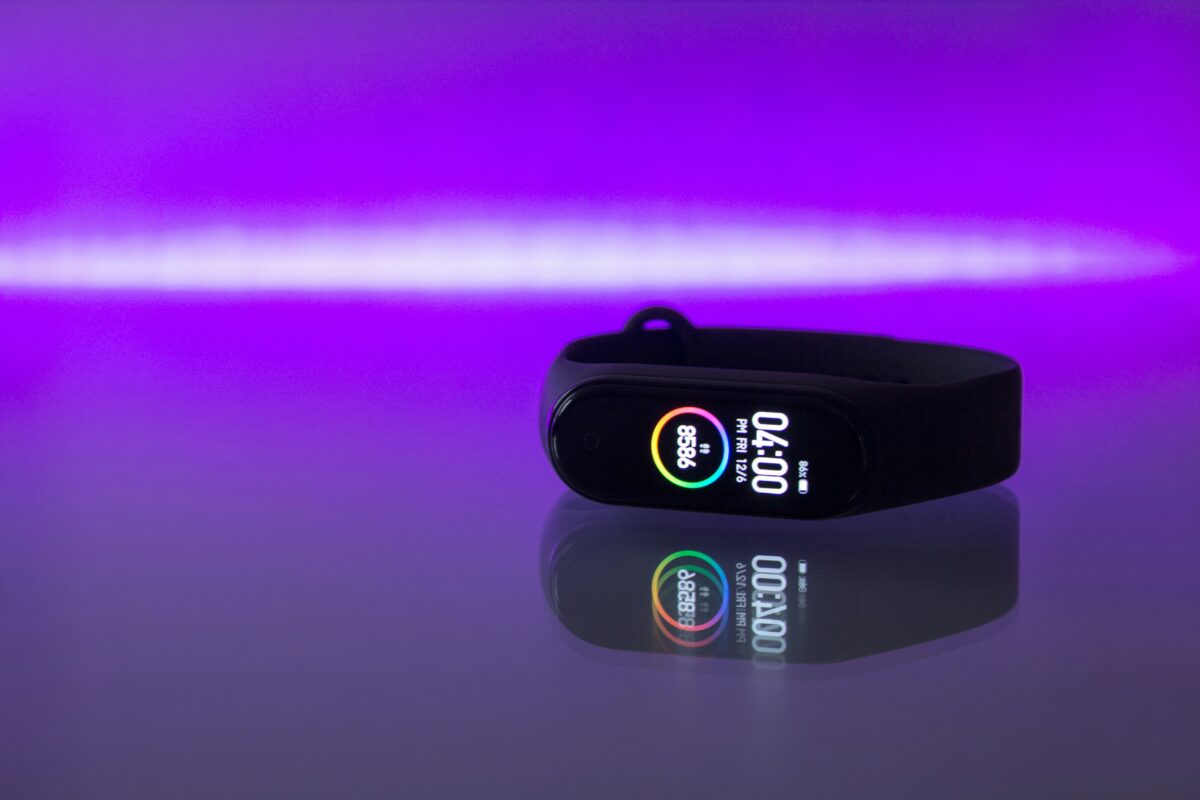
Half of the participants used the Circadian Rhythm for Mood (CRM) app, which was paired with a Fitbit to continuously monitor sleep, activity and heart rate, while the smartphone’s own light sensor tracked light exposure. Using this information, the app generated a personalised circadian rhythm score, provided a three-day mood forecast based on machine learning, and delivered daily recommendations for when to seek bright light exposure. Participants received alerts when their rhythms became less stable.
The other half received a sham app with an identical appearance but without the active algorithm. It provided non-actionable feedback designed not to influence circadian behaviours, including a fixed bright light recommendation scheduled three hours after waking.
The authors then compared the number of recurrent episodes between the two groups.
Results
Of the 93 people who joined, 13 (14%) dropped out before giving any follow-up data and could not be included, leaving 80 people (38 using the CRM app and 42 using the sham app), each followed for up to a year. The two groups were well matched at the start, with a similar spread of ages, diagnoses, illness histories and symptom severity, and no major difference in the medications people took, either at the start or over the year. Slightly more of the sample were female (62.5%).
Did people using the CRM app have fewer mood episodes?
Yes. Over the year, CRM app group had 15 recurrent mood episodes compared with 53 in the sham app group. That is, roughly 0.4 episodes per person on the CRM app, compared with 1.3 per person on the sham app. After adjusting for age, sex, diagnosis and illness history, those using the sham app had around three times the rate of recurrence (Incidence rate ratio [IRR]=3.39; 95% CI=1.86 to 6.17).
More people dropped out of the CRM app group (9 of 47) than the sham app group (4 of 46), so the authors re-ran the analysis under a deliberately conservative assumption: that everyone who left the CRM group had actually stayed and had as many recurrences as the sham group (that is, that the app did nothing for them), while assuming no recurrences for those who left the sham group. Even then the effect held, though the estimated effect size was smaller (IRR=1.75; 95% CI=1.07 to 2.88).
No serious adverse events were reported in either group.
What about time unwell and time to the next episode?
People using the sham app spent far more time unwell over the year: the cumulative number of days in an episode was about 2.8 times higher (duration rate ratio=2.76; 95% CI=1.19 to 6.40). They also had a recurrence sooner, with time to recurrence favouring the CRM app (hazard ratio=3.03; 95% CI=1.58 to 5.81).
Did it work equally across different types of episodes?
Evidence was less certain when examining specific episode types. Of the 68 recurrent episodes, 48 were depressive, and the effect on these was clear and based on the strongest evidence (IRR=2.85; q=0.009). The apparent effect on hypomanic episodes looked large but rested on just 16 episodes, with a very wide confidence interval (IRR=15.32; q=0.017). Only four manic episodes occurred in the whole study, far too few to draw any firm conclusions (IRR=3.28; q=0.514).
Conclusions
The authors conclude that:
CRM has potential as an innovative, scalable digital chronotherapeutic adjunct to standard care.
The findings are promising: the CRM app reduced recurrence compared with a closely matched sham intervention, and the effect remained after a conservative sensitivity analysis. However, the study does not establish why the intervention worked. Benefits may have resulted from improved circadian stability, changes in sleep-related behaviours, increased self-monitoring, or other pathways. Future studies will need to identify the mechanisms underlying the effect.

Strengths and limitations
This is a well-conducted trial with real strengths. To the authors’ knowledge, it is the first double-blind, sham-controlled trial of a digital treatment that reads the body clock from passive data. The sham app was a genuine design strength: it controlled for the non-specific benefits of simply using an app (e.g., attention, self-monitoring, the sense of doing something), so any difference between the groups can be attributed to the circadian feedback rather than to app use in general. Recurrence was evaluated in-person by psychiatrists rather than from self-report alone, and the statistical analysis was conducted thoroughly using several complementary and sophisticated statistical models.
The trial also has important limitations, and the authors acknowledge most of them themselves:
- The hypomanic and manic subgroups were too small.
- The sample was restricted to Korean adults who could use smartphones and wear a device consistently, limiting generalisability.
- The Fitbit is consumer-grade, not medical/research-grade, so its heart rate and sleep algorithms may introduce measurement error.
- The treating psychiatrists were also the site investigators, so their dual role may have influenced how symptoms were discussed at visits.
- The trial did not test whether changes in circadian rhythms explained clinical improvement; circadian markers were not validated against gold-standard measures such as dim light melatonin onset.
- Medication effects were not examined in sufficient detail.
- CRM app was not developed through structured lived experience co-design.
- Using a sham digital app raises design and ethical questions, and expectancy and awareness of monitoring may also influence their behaviour.
Beyond what the authors flag, a few things stand out to me. First, people were enrolled for having a mood disorder, not a confirmed circadian rhythm disturbance. Since not everyone with a mood disorder has disrupted rhythms, this leaves open whether the app helps broadly or mainly those who were disrupted to begin with. Second, the sham advised light three hours after waking. The authors intended this as neutral comparison, but for someone already getting early morning light, it could have shifted the timing of their light exposure, and the study did not measure whether the sham group’s real-world light exposure actually changed. Third, the senior author co-founded the company behind the app. That doesn’t invalidate the findings, but independent replication by teams without a commercial stake will be important.

Implications for practice
The most important implication of this study is that it moves us closer to a more proactive approach to mood disorder management. Current care is often reactive: clinicians and patients respond after symptoms have returned. By continuously monitoring sleep, activity and light exposure, digital circadian interventions may offer a potential way to identify periods of increased vulnerability and support people before a full mood episode recurs.
The CRM trial also highlights a new role for digital chronotherapeutics as an adjunct to standard care. Rather than simply tracking symptoms, this approach uses real-world behavioural data to provide personalised feedback aimed at stabilising circadian rhythms. If replicated in larger and more diverse samples, interventions like CRM could complement existing treatments by helping patients maintain protective daily routines between clinical appointments.
However, the next step is not simply making these tools available to everyone with a mood disorder. A key unanswered question is who benefits most. Circadian rhythm disturbance is common in mood disorders, but not universal. Future studies should determine whether targeting individuals with measurable sleep or circadian instability produces greater benefits than offering the intervention broadly. This would move the field towards a more personalised approach, where treatment is matched to the biological vulnerabilities of each patient.
Implementation challenges also need careful consideration. The success of a digital intervention depends not only on whether it works under trial conditions, but whether people can and want to use it over the long term. Sustained wearable use, digital access, privacy concerns and engagement may influence who benefits in real-world settings. Co-design with lived experiences will be essential to ensure these tools fit into everyday life rather than becoming another burden.
Finally, while these findings are promising, CRM should be viewed as an emerging tool rather than a replacement for established treatments. Larger trials, replication across different populations, and studies examining whether changes in circadian rhythms actually explain the clinical benefit will be needed. Nevertheless, this study provides an important proof-of-concept: monitoring and supporting the body clock may become a valuable new pathway for preventing mood episode recurrence.
Statement of interests
Mirim Shin has no conflicts of interest to declare in relation to this article. She recently co-authored a paper led by a colleague that included the senior author of the Yeom et al. as a co-author. This prior collaboration is unrelated to the present commentary. ChatGPT was used for language refinement.
Editor
Edited by Éimear Foley. ChatGPT assisted with language refinement and formatting during the editorial phase.
Links
Primary paper
Ji Won Yeom, Jaegwon Jeong, Eunsoo Moon, Young-Min Park, Moon-Soo Lee, Ho-Kyoung Yoon, Cheolmin Shin, Yeaseul Yoon, Ju Yeon Seo, Sehyun Jeon, Mingee Choi, Chul-Hyun Cho, Hyonggin An, Taek Lee, Jung-Been Lee, and Heon-Jeong Lee (2026). Circadian Rhythm Stabilization App to Prevent Mood Episode Recurrence in Patients With Mood Disorders: A Multicenter, Double-Blind, Sham-Controlled, Randomized Clinical Trial. Am J Psychiatry, appiajp20251008. https://doi.org/10.1176/appi.ajp.20251008
Other references
Ferguson A. Are circadian rhythms the key to understanding our physical and mental health? The Mental Elf, 2025. National Elf Service blog
Fitton R. Body clocks and mental health: patients set the research agenda. The Mental Elf, 2026. National Elf Service blog
Bai, C., Fan, X., Lu, W., Wei, M., & Wu, D. (2026). Meta-analysis of recurrence rate and influencing factors of bipolar disorder. Journal of Affective Disorders, 394, 120570. https://doi.org/https://doi.org/10.1016/j.jad.2025.120570
Birmaher, B., Merranko, J. A., Gill, M. K., Hafeman, D., Goldstein, T., Goldstein, B., Hower, H., Strober, M., Axelson, D., Ryan, N., Yen, S., Diler, R., Iyengar, S., Kattan, M. W., Weinstock, L., & Keller, M. (2020). Predicting Personalized Risk of Mood Recurrences in Youths and Young Adults With Bipolar Spectrum Disorder. J Am Acad Child Adolesc Psychiatry, 59(10), 1156-1164. https://doi.org/10.1016/j.jaac.2019.12.005
Desai Boström, A. E., Cars, T., Hellner, C., & Lundberg, J. (2025). Recovery and Recurrence From Major Depression in Adolescence and Adulthood. Acta Psychiatrica Scandinavica, 151(5), 625-633. https://doi.org/https://doi.org/10.1111/acps.13785
Gupta, S., Astill Wright, L., Onwuchekwa, O., Meader, N., Kenny, R. P., Steele, R., Morriss, R. K., Alla, L. R., & Gupta, N. (2025). Interventions for helping people recognise early signs of recurrence in bipolar disorder. Cochrane Database Syst Rev, 6(6), Cd015343. https://doi.org/10.1002/14651858.CD015343.pub2
Moriarty, A. S., Meader, N., Snell, K. I., Riley, R. D., Paton, L. W., Chew-Graham, C. A., Gilbody, S., Churchill, R., Phillips, R. S., Ali, S., & McMillan, D. (2021). Prognostic models for predicting relapse or recurrence of major depressive disorder in adults. Cochrane Database Syst Rev, 5(5), Cd013491. https://doi.org/10.1002/14651858.CD013491.pub2