Can depression treatment be faster? Traditional transcranial magnetic stimulation takes 6–8 weeks, new accelerated protocols may deliver results in 5 days.
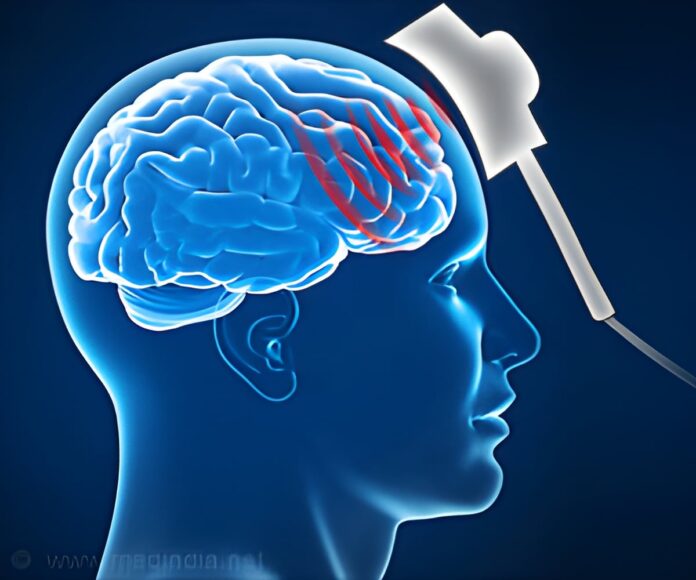
For many patients with depression who do not find relief with medication, transcranial magnetic stimulation (TMS) has become an increasingly important treatment option. It is a noninvasive therapy that uses magnetic pulses to stimulate targeted areas of the brain (1✔ ✔Trusted Source
Efficacy of 5 X 5 accelerated versus conventional repetitive transcranial magnetic stimulation (rTMS) for treatment-resistant depression
Go to source
).
However, the standard course of TMS requires daily clinic visits over six to eight weeks. That schedule alone can make treatment difficult for many patients to manage.
TMS is an established treatment for treatment-resistant depression. Large studies have shown that it significantly reduces symptoms in 60–70% of patients, with 25–35% achieving remission. It is also covered under most insurance plans.
New research from UCLA Health suggests that a significantly accelerated version of TMS—five sessions per day over just five days, known as the “5×5” protocol—may produce comparable results for many patients. This approach could make therapy more accessible for people for whom the traditional schedule is a barrier.
The study, published in the Journal of Affective Disorders, compared outcomes for 175 patients with treatment-resistant depression. One group of 135 participants received conventional TMS therapy consisting of one session per day, five days a week, for six weeks. A second group of 40 participants received the accelerated protocol of five sessions per day for five consecutive days.
Both groups showed meaningful reductions in depression symptoms. There was no statistically significant difference in outcomes between the two approaches.
Can Five Days Match Six Weeks in Depression Treatment?
“For patients with treatment-resistant depression, getting to the clinic every weekday for at least six weeks can be a real obstacle,” said study lead author Michael Apostol, a Ph.D. student at the UCLA Semel Institute for Neuroscience and Human Behavior. “What this study suggests is that we may be able to offer those same patients a path to meaningful relief in less than one week by condensing 25 TMS treatments over just five days.”
One of the study’s most clinically significant findings involved a subgroup of patients in the accelerated group who showed little improvement immediately after finishing their five-day course.
When researchers followed up two to four weeks later, those same patients showed meaningful symptom improvement — a 36% reduction in depression scores on average.
This finding carries a practical implication. A patient who appears not to have responded at the end of five days may still benefit significantly in the weeks that follow.
“All patients in this study had not benefitted from multiple trials of antidepressant (https://www.medindia.net/news/healthwatch/anti-depressants-to-treat-depression-understanding-the-side-effects-214541-1.htm) medication, yet they obtained great benefit from 5×5 treatment. Some patients need to wait a few days or weeks to see benefit, and we encourage them not to give up too quickly if they don’t feel better right away,” said senior author Dr. Andrew Leuchter, distinguished professor and director of the TMS Service of the UCLA Department of Psychiatry and Biobehavioral Sciences. “We are finding that the benefits of 5×5 can be even greater with an extra one-to-days of treatment after two weeks.”
Does the Six-Week Standard Still Lead in Brain-Based Depression Treatment?
The conventional six-week approach has a well-established track record. The study found that it continued to outperform the accelerated approach on some longer-term measures.
The authors also noted that this was not a formal clinical trial with random assignment. Larger, controlled trials will be needed to confirm these findings.
In addition to work on accelerated TMS, researchers at UCLA are exploring new indications, including obsessive-compulsive disorder and chronic pain. This positions TMS as a key part of the next generation of brain-based therapies for mental health.
Reference:
- Efficacy of 5 × 5 accelerated versus conventional repetitive transcranial magnetic stimulation (rTMS) for treatment-resistant depression – (https://www.sciencedirect.com/science/article/abs/pii/S0165032726001965?)
Source-Journal of Affective Disorders