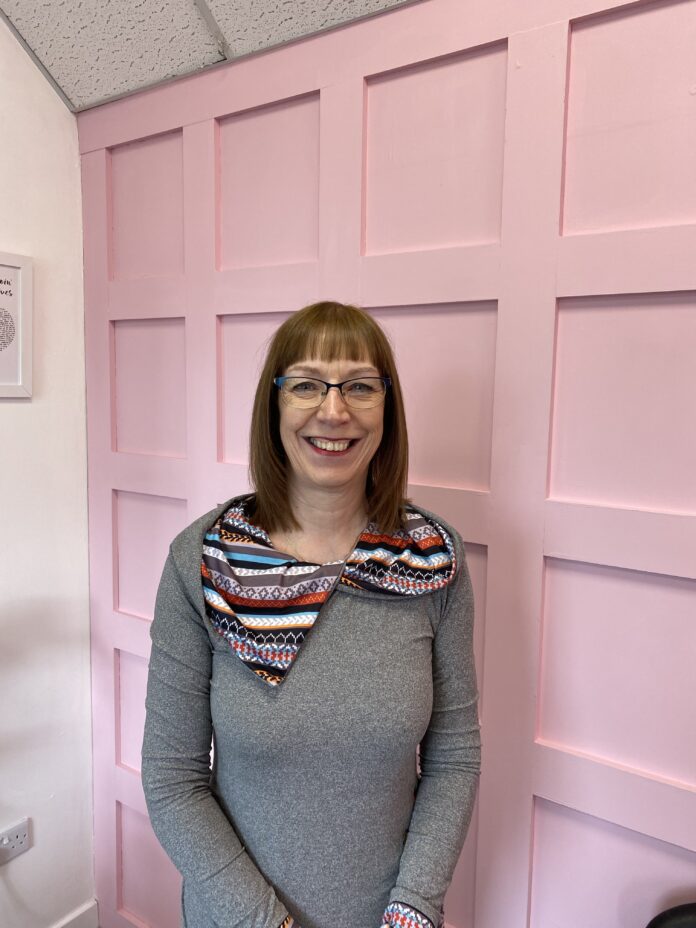
Hello! My name is Emma Galloway and I am a fourth year (undergraduate) Occupational Therapy student from Queen Margaret University, Edinburgh and I have just completed a ten week placement with Alzheimer Scotland. Our work included engaging and listening to members from The National Carers Action Network (NDCAN) allowing us the valued opportunity to share their stories. This blog post is a continuation of Fiona’s journey from last week, where Aoife introduced us to Fiona’s background. Fiona spoke to us about advocating for her husband, Ian. You can read part 1 of her story in last weeks blog here and continues to share her story…
In conversation with Fiona
Fiona has been an advocate for her husband, Ian, throughout his journey with dementia. Fiona describes advocacy as a necessity when systems fail to uphold dignity and basic human rights or individuality. Fiona’s sustained advocacy on behalf of her husband, Ian was due to repeated experiences with care environments and administrative systems that, she describes “have struggled to maintain person-centred care”. Fiona’s story highlights how important speaking up for the person living with dementia is. Her experience extends beyond Ian, grounded in a consistent concern for those without family advocacy. She aims to help those who may not have a voice.
She describes her advocacy work concerning food provision within hospital wards and care homes. Fiona repeatedly encountered meals for Ian that was characterised by limited choice, poor quality, menu fatigue, and reheated or visually unappealing food. Fiona explained that mealtimes are central to wellbeing, identity, and social participation for people with dementia. Fiona focused on practical but fundamental changes: clearer modified-texture standards, improved nutritional value, greater consistency across settings, and recognition that persisting with attempting meals in a different setting or time matters. Notably, changes were rarely proactive that resulted in Fiona having to make formal complaints and escalation through management structures.
Fiona faced challenges with language used by others, particularly the use of terms such as “assault” to describe behaviours arising from distress, confusion, or neurological impairment. The definition of “assault” describes having criminal intent, in Ian’s regard, he has an AWI in place (Adults With Incapacity Act) meaning he cannot make any “reasoned decisions”. This contrast in language overlooks attempts to understand Ian’s non-verbal means of communication. Fiona described, consistently challenging this framing, emphasising that behaviours associated with dementia or acquired brain injury can be forms of communication such as signals of unmet need, sensory overload, fear, or pain. Stigmatising language points to wider systemic misconceptions about dementia and Fiona’s ongoing campaign shows that there are legal constraints in which staff should be aware of.
Throughout Ian’s journey, Fiona encountered staff who were well-meaning but, in her opinion, require more specified dementia training. Gaps in education in Fiona’s experience were particularly evident in areas such as brain injury awareness, dementia-specific communication strategies, trauma-informed care, and understanding sensory overload. In Fiona’s experience, she noted positive shifts occurred with psychological support and structured behaviour frameworks such as traffic-light systems were used. Fiona’s advocacy is fuelled through the “gaps in duty of care” which she “can’t help but raise it”, underscores the need for maintaining person-centred care and supporting behaviours.
Despite holding Power of Attorney, Fiona talked about this role being inconsistently recognised during Mental Health Act procedures. Information regarding “named person” provisions was not routinely shared, leaving Fiona in a process she was “horrified” with. This is something Fiona is increasing awareness for as some individuals do not know this legal frame. Obtaining a “named person” status is a long process and Fiona intends to make this known to other carers. Alzheimer Scotland is supporting Fiona with raising awareness surrounding power of attorney in conjunction with the Mental Health Act if someone requires treatment.
Fiona repeatedly identified what worked for Ian. Through Fiona’s role as his wife, his care needs are aligned with his identity and life history: time outdoors, gardens and fresh air, cafés and cinema routines, music and singing, physical touch through massage, and sensory experiences such as Reiki and sound baths. Even simple acts of sharing a beer, reading, familiar music, played a crucial role in preserving person-centred care.
Through engagement with Alzheimer Scotland, The National Dementia Carers Action Network (NDCAN), and local Carers Centre, these forums offered access to policymakers, and opportunities to influence policy, and carers’ parliaments. These groups provided Fiona with platforms for campaigning. Crucially, Fiona wants those who lack family support, or confidence to challenge systems to be aware of their options in care, information and to maintain good standards. Fiona’s experience demonstrates the ripple effects across systems.
Fiona’s advocacy is rooted in deep love for Ian and a belief in dignity, equity, and human rights for people living with dementia. She presents the challenges faced by those living with dementia while offering a hopeful counter‑narrative, that keeping practice person-centred, with appropriate informed training and awareness around legal framework can make a difference.
Thank you for reading this blog. It has been a pleasure to listen to Fiona and edit this blog on her behalf.
Contributor: Emma Galloway, Queen Margaret University, Occupational Therapy Student.
If you want to learn more about NDCAN or join, please visit this link here
You can find the Alzheimer Scotland 24 hour Freephone Dementia Helpline, for information, signposting and emotional support to people with dementia, their families, friends and professionals here
Allied Health Professionals have created a suite of information resources for people with dementia, their families and carers that you can find here
Enjoyed this blog? Tell us more. We love feedback.
Please spend 1 minute completing this short anonymous feedback form to allow us to make our blog posts even better in 2026. Thank you
AHP Let’s Talk About Dementia Blog Feedback Form – Fill out form