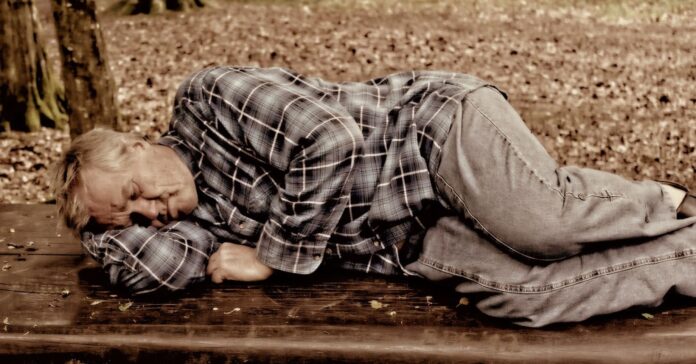
Source: Geralt / Pixabay
I live a block away from the University of Cincinnati in a community called Clifton. I came here to finish my molecular biology degree in 2009, and I loved living here so much that I stayed.
Today, I live a happy and productive life, which is a far cry from my four years homeless in Los Angeles, due to untreated schizophrenia. Looking back, during my entire time homeless, including 13 months living outside, I was never offered help or services.
The neighborhood where I live today is fairly safe, populated mostly by students. But if you drive about 10 minutes from my apartment in a certain direction, you hit a tough area of Cincinnati called “Over the Rhine,” founded by German immigrants in the late 1800s. The area used to be beautiful, but is now teeming with homeless people, including the chronically homeless who live outside under bridges and hidden between big buildings, as I did in Los Angeles from 2006-2007.
In 2018, I began attending a Lutheran Church in the heart of Over-the-Rhine. I was attracted to the church’s homeless ministry because of my lived experience in the past. The church provides food and during the winter, shelter, to the most desperate among us. Some of these people live outside nearly year round, and may have been for years. My church also supports an initiative called the “Welcome Home Collaborative” which helps them get into free private apartments, and offers services for mental health and drug addiction.
Though Clifton is mostly safe, sometimes the homeless beg and loiter near local shops and restaurants. But a few days ago I saw something I had never seen before in Clifton: a middle aged woman, sleeping, literally, on a sidewalk.
My first instinct was to bend down and see if she was breathing. I badly wanted to help any way I could. But instead, I did what most Americans do: I passed by her without checking or greeting her, or asking if she was hungry, or directing her to places where she might get a free bed and other badly needed services.
For the last few days, I have been weighing out my decision to walk past her and do nothing. I am trying to understand why this was a decision I made.
I considered other, similar situations. If she had appeared to be 15 years old, I would have called the police immediately. I know a child would have been given decent, wrap around services. If she had appeared to be 75, I would have also called the police, who may have contacted adult protective services, as her choice to sleep in such a horrible condition could have been due to a dementia she needed treatment for.
So why do we treat middle-aged people in desperate need differently than a child or an elderly person?
I would argue that some people living outside in horrendous conditions cannot make reasonable choices for themselves.
In California, an Act called CARE was recently implemented in every county in the state. It stands for Community Assistance Recovery and Empowerment Act. Under CARE, if you see a person like the woman I saw on the sidewalk, you can file a petition with the state to have a group of medical professionals and social workers check on them and ask them what they need. Following their encounter with the homeless person, wherever they are, details of this individual are taken to an official CARE court and a 12 month plan is created to rebuild the person’s life. The plan can be extended by 12 months.
The CARE Act is counterintuitive for most Americans, including me. I was the person who did nothing for the homeless woman, because there wasn’t anything to be done. But it greatly encourages me that this is changing in California. Hopefully, other states will establish and provide community assistance and recovery programs as well. Perhaps then, I will be more confident to intervene in a similar situation.
I am anxious to see what happens in the next several months with the CARE Act, whether it is a success or failure. But I do agree that programs just like this are worth a try. I hope someday I can file a petition here in Ohio to bring services to people sleeping on sidewalks.