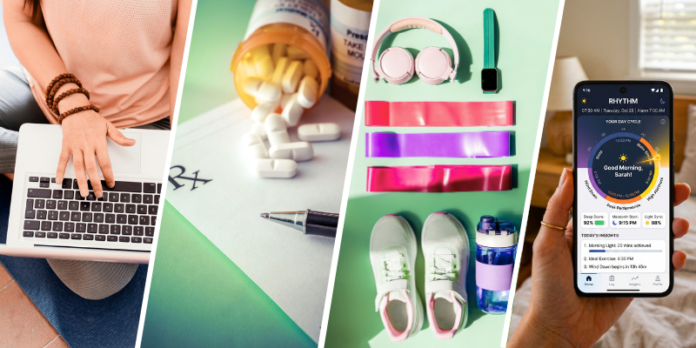
Discover key research updates on bipolar treatment options, minimum medication doses, exercise for anxiety, wearable technology, and social support.
Key Takeaways
- The free EBI-BD tool lets you compare select bipolar treatments by side effects across 116 options.
- Lowering your med doses below key limits increases hospital risk, but keeping one drug at full dose helps offset lower doses of another.
- Exercise can ease anxiety within hours for adults 45+ with depression or bipolar disorder.
- Steady sleep schedules and strong social support improve daily life, but proof they prevent mood episodes is limited.
Finding a bipolar disorder treatment often comes down to guesswork and trial and error. A new research-powered tool aims to change that, giving you and your provider a shared, evidence-based starting point. It draws on one of the most comprehensive treatment reviews to date to rank options by what matters most to you, whether that’s how well something works or the side effects that come with it.
This tool is just one of five new studies with findings that can inform your care, from the medication doses linked to a lower hospitalization risk to the role that factors beyond formal treatments — like exercise, daily routines, and support from loved ones — may play in living well with bipolar disorder. Here’s what each study found and what it means for you.
Free Tool Helps Match Bipolar Treatments to Your Priorities
An international team of 42 researchers pooled 77 prior reviews covering 116 bipolar disorder treatments, including medications, brain stimulation, and mental health therapy. The team compared how well the treatments work, their side effects, and the strength of the evidence.
The study identified the most effective options across different mood phases:
- Bipolar Mania The most effective medications include risperidone (Risperdal), paliperidone (Invega), and cariprazine (Vraylar).
- Bipolar Depression Divalproex or valproate (Depakote), lurasidone (Latuda), and cariprazine (Vraylar) performed best overall.
- Maintenance Treatment Asenapine (Saphris), quetiapine (Seroquel), and aripiprazole (Abilify) rose to the top.
The full results were published in The BMJ in August 2026. The researchers also went one step further, partnering with people with lived experience of bipolar disorder to create a free, interactive platform — Evidence-Based Interventions for Bipolar Disorder (EBI-BD) — that lets anyone compare treatments across mood phases on the factors that matter most to them, such as efficacy or side effects like weight gain. This is a living project and will be kept up to date as new evidence emerges.
What This Means for You
- Try the EBI-BD tool. Create an EBI-BD account, plug in what’s important to you, and get a ranking of treatments built around your priorities.
- Don’t stop what’s working. There’s no need to ask your provider to change your plan based on these findings alone. Studies look at treatments that are generally effective; only you and your care team can determine what works for you.
- Researched doesn’t mean approved. Although all listed drugs have scientific evidence behind them, some (like tamoxifen) aren’t indicated for bipolar disorder, according to the U.S. Food and Drug Administration (FDA). The study authors note that tamoxifen’s strong results, in particular, come from smaller studies, so more research is needed to confirm whether the benefits for bipolar disorder hold up.
Is There a Minimum Med Dose You Have to Take to Prevent Rehospitalization?
Once a manic or depressive episode stabilizes, prescribers often lower medication doses to help with side effects and make it easier to stick with treatment plans. But taking too little medication may raise the risk of another hospitalization. Korean researchers used 20 years of national health insurance data to look back at more than 20,000 people with first-episode bipolar disorder, examining how their medication doses after hospitalization related to whether they were readmitted.
Findings published in Molecular Psychiatry show that the risk of rehospitalization rose once daily maintenance doses dropped below a certain level. For mood stabilizers, that dose equaled about 700 milligrams (mg) of lithium or 600 mg of valproate. The minimum antipsychotic dose was equivalent to about 2.5 mg of risperidone or 5 mg of olanzapine (Zyprexa). For people taking both medication types, a lower dose of one was less risky when the other medication was kept at the threshold dose.
What This Means for You
- The risk of too-low doses is real. Dropping below certain thresholds raised hospitalization risk, even for those who had remained stable for three or more years.
- Combining medication types may help offset the risk of lowering one. When one medication dropped below the threshold dose, rehospitalization risk was lower if the other stayed at or above its own.
- These results offer a general reference point. The thresholds apply to drug classes, not individual medications. Some medications, like lithium, have separate research-backed guidelines for target blood levels.
Can Exercise Ease Anxiety Symptoms Fast?
Researchers based in the United States and France tracked 459 people with bipolar disorder, major depressive disorder, anxiety disorders, and no diagnosis for two weeks, prompting them four times a day to report their mood and whether they’d just exercised.
The research, published recently in the journal Psychiatry Research, found that for those with bipolar disorder or major depression, exercising was followed by a drop in anxiety symptoms within hours. Exercise didn’t seem to shift other emotions, including feeling sad or low-energy. The anxiety-lowering effect showed up consistently in adults 45 and older, but not in younger participants, and was strongest in those with bipolar 1 disorder compared with bipolar 2 disorder.
What This Means for You
- Moving your body may help ease anxiety fast. Exercise, physical leisure, and sports all counted in this study.
- Exercise isn’t a treatment replacement. This is observational, self-reported data, not a clinical trial, meaning the results can’t establish cause and effect or a new treatment.
New Clinical Trial Finds Wearable-Powered App May Help Prevent Mood Episodes
Medication alone often isn’t enough to stop mood episodes from returning. So a Korean research team tested whether a smartphone app that tracks sleep, activity, and light exposure through a wearable device and offers personalized feedback could help stabilize circadian rhythms and prevent recurrence.
Over 12 months, 93 adults with bipolar disorder or major depressive disorder were randomly assigned to use either the real app or a look-alike version with no meaningful guidance. The findings, published recently in the American Journal of Psychiatry, show that people using the real app had fewer mood episodes overall. Hypomanic episodes dropped nearly 15-fold (though that’s based on a small number of cases and needs confirmation). Depressive episodes fell nearly threefold. Manic episodes showed no clear difference but were too rare to draw firm conclusions.
What This Means for You
- Routine matters. Keeping your sleep, activity, and light exposure on a steady schedule may help protect against mood episodes.
- It’s not a medication replacement. All participants maintained their existing prescriptions and therapies. This app was designed to shore up treatment plans, not upend them.
- The app isn’t ready for release. The results are encouraging and build on previous research on the role of circadian rhythms in mood. But more research is needed to understand the app’s impact on manic episodes and confirm the findings overall.
Social Support Key to Feeling Well, Even After Mood Stabilizes
A new study published in the journal Bipolar Disorders explored how social support relates to why some people in remission from bipolar disorder feel like they’re living well, while others don’t. Researchers surveyed 105 clinically stable patients in remission at a Turkish outpatient clinic, measuring how supported they felt, how well they kept up with their medications, and their scores on a “recovery” measure, a concept covering hope, confidence, willingness to ask for help, having goals, relying on others, and not letting symptoms take over.
Even though everyone was clinically stable, these scores varied widely. The more supported people felt, the higher their recovery scores tended to be. Sticking with medications was linked too, but less strongly, suggesting that leaning on family and friends may matter even more for feeling like you’ve gotten your life back.
What This Means for You
- Support from people who care makes a difference. Feeling like loved ones have your back measurably helps.
- Symptom remission isn’t the whole picture. These results suggest it’s common to have clinical stability but not yet feel like yourself.
Editorial Sources and Fact-Checking
bpHope follows strict sourcing guidelines to ensure the accuracy of its content, as outlined in our editorial policy. We use only trustworthy sources, including peer-reviewed studies, board-certified medical experts, people with lived experience, and information from top institutions.
SOURCES +
- De Prisco M et al. Evidence-Based Interventions for Bipolar Disorder Across Phases and Age Groups: Living Umbrella Review, Evaluation, Analysis, and Communication Hub (U-REACH) Project. The BMJ. August 11, 2026.
- U-REACH Project. Evidence-Based Interventions for Bipolar Disorder (EBI-BD).
- Medication Guide: Solamox (Tamoxifen Citrate). U.S. Food & Drug Administration. April 2019.
- Stapp EK et al. The Dynamic Influence of Exercise on Emotional State Among People With a History of Mood Disorder. Psychiatry Research. October 2026.
- Yeom JW et al. Circadian Rhythm Stabilization App to Prevent Mood Episode Recurrence in Patients With Mood Disorders: A Multicenter, Double-Blind, Sham-Controlled, Randomized Clinical Trial. American Journal of Psychiatry. June 24, 2026.
- Ayhan CH et al. The Relation Between Perceived Social Support, Treatment Adherence and Recovery Among Individuals Diagnosed With Bipolar Disorder. Bipolar Disorders. August 10, 2026.
- Kang S et al. Association Between Maintenance Doses of Mood Stabilizers and Antipsychotics and Risk of Readmission in First-Episode Bipolar Disorder. Molecular Psychiatry. July 31, 2026.
- Malhi GS et al. The Use of Lithium for the Treatment of Bipolar Disorder: Recommendations From Clinical Practice Guidelines. Journal of Affective Disorders. August 1, 2017.