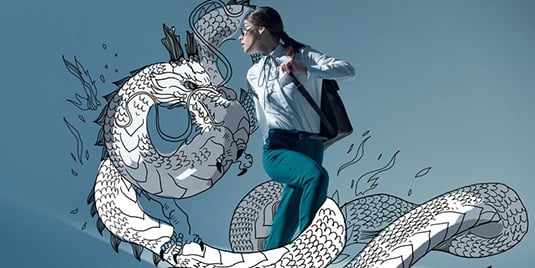
Living with bipolar disorder means facing the pull of hypomania — a state that feels good in the moment but can upend my stability and relationships.
Bipolar depression affects my decision-making, especially when it comes to work. Hypomania also influences my choices, and it tends to have a stronger impact on my relationships.
Mania, on the other hand, is marked by a loss of impulse control and a surge in risk-taking behaviors. That might look like buying a brand-new vehicle — or two — and maxing out a credit card in just a few days. Or it could mean abruptly selling a successful business without telling anyone, all so you can go backpacking in the Andes … even if you’re not much of a hiker and you happen to hate bugs.
The Differences Between Mania and Hypomania
Mania tends to be extreme. Hypomania, being less intense, is often seen as its “harmless” cousin. Bought three pairs of shoes you don’t need? Told your boss off at work? Stayed up half the night cleaning your house? Adorable.
Hypomania is not adorable.
It’s dangerous — partly because it seems harmless. Think of it this way: You can dig yourself into credit card debt with a spade or a backhoe. Either way, you end up in the same dark hole.
Mania and hypomania are different enough to warrant distinct diagnoses, but what they share is the capacity to wreak havoc. So please, no comparison contests between bipolar 1 and bipolar 2.
Personally, I’m far more afraid of my hypomanic episodes than my depressive ones — mostly because I have zero positive associations with depression. I’ve had my share of fun during hypomanic spells (before the tornado flattens everything), usually because those episodes come with impulsivity and a total lack of inhibition.
Why say no when saying yes is so much more fun?
What Hypomania and an Ex-Boyfriend Have in Common
It’s important for me to pause here and explain that I’m a fairly inhibited sort to begin with. I put myself to bed at 9 p.m. for most of high school because I didn’t see the point in staying up late if I wanted to get up early. Enough said.
If you’ll forgive a tired trope, my experience of hypomania is a lot like the charming ex-boyfriend who shows up with a fresh batch of promises just when you’re confident you’ve finally put all the pieces of your life back together.
He’s lighthearted and better-looking than you remembered, and, you know what? This time feels different. What’s the harm in hearing him out — over dinner and drinks?
The Seduction of Hypomania
Before you know it, you’re at the club together, and then he stays the night, and pretty soon, he’s moving in — and suddenly, you can’t get any sleep because he’s throwing parties that last until the wee hours of the morning.
Now you’re late for everything because he takes your car without asking, and you’ve stopped laughing. He’s started yelling and telling you what to wear, so you try to break it off. He begs you not to, he cries just the right amount, and when your friend drops you off from work the next evening, you realize he’s taken your car for good and drained your checking account.
Try to remember this when he parks his beat-up Chuck Taylors on your doorstep six to eight months later.
If this were a movie, I would’ve stopped watching 10 minutes in. I have no patience for bad boys — onscreen or in real life — and yet I’ve been seduced by hypomania so many times. It just feels so good to throw caution to the wind, especially after living in the cave of depression for months.
Not all my hypomanic decisions come in like a wrecking ball. Some of the worst ones are deceptively innocent. The biggest mistake in the story above? Letting “Mr. Chuck Taylors” inside the door in the first place.
Decisions That Unleash the Hypomanic Dragon
Sometimes, it’s something as small as staying up late instead of brewing chamomile tea and taking a warm Epsom salt bath. Or maybe it’s saying yes to a second drink. That tiny choice can be the thing that flips the switch and sets off an episode.
I’m notorious for picking fights the day after I’ve had more than one alcoholic beverage. Can just one or two drinks really make that much of a difference? For me, yes — especially because that choice usually comes bundled with other ones, like being out late, which means disrupted sleep and a change in when I take my medication.
Worse, I may have forgotten my pills altogether. And let’s be honest — I’m probably dehydrated. I was having fun, and now I’m a dragon, ready to breathe fire.
It’s usually the people closest to me who get scorched. These days that would be my husband. I’ve never asked him what it’s like to be married to a dragon, but I’ve noticed how he handles it. He never confronts the dragon. But when his wife shows up again, he talks about what happened — and how it made him feel.
Bipolar disorder isn’t a license to be a jerk. And if I forget that, he’s there to gently remind me.
Doing Damage Control After a Hypomanic Episode
Apologies have never been my strong suit. I grew up in a family where “sorry” was something you showed, not something you said. In our house, empty apologies were met with deep disdain.
But in situations like this, a sincere apology feels vital. My personal ideal is to never need to apologize — to learn from my mistakes and not repeat them. But with bipolar disorder, the odds of a recurrence are fairly high.
That’s why I have to say the words: “I’m sorry I took my anger out on you. You didn’t deserve that. What can I do to make things right between us?”
My husband is my role model when it comes to apologies. He’s taught me how to offer the kind of apology he needs to hear. This one works for him.
If you have bipolar, you owe it to your loved ones to find out what kind of apology helps them cope — especially when they’re carrying the weight of repeated run-ins with the dragon.
How You Can ‘Train Your Dragon’ When It Comes to Hypomania
And, of course, never stop working with your dragon. Mine can only count to 10, but sometimes that’s enough to avert a crisis.
This dragon with the flash-in-the-pan temper is at the heart of my fear of hypomania.
There are times when I feel like I’m performing a public service by isolating myself from other people. Part of my hypomanic impulsivity is a lack of filter — a total disregard for what comes out of my mouth. It’s not in my nature to speak carelessly or without regard for consequences, but my worst hypomanic episodes have always been punctuated by words I can’t take back.
From Chipmunks to Chaos: Why I Step Back
When I’m hypomanic, I rarely pause long enough to consider the consequences of my actions. But if I can recognize what’s happening — if I can name the state I’m in — I can choose not to make any major decisions that day. I can delay action for 24 hours and use that time to reach out to people in my support network.
In the beginning, hypomania can feel harmless — like watching a couple of chipmunks playing in the backyard. Just lively entertainment. Then, 25 more chipmunks show up on dirt bikes, hopped up on energy drinks, and some of them have rabies, and they’re chewing the wires. Before you know it, your home has burned to the ground.
How did this happen? Again?
I couldn’t keep up with what was happening inside my own head. That’s why I need to step back from decision-making. My brain is bursting with ideas — so many that I can’t actually solve a problem because those ideas are soaking up all the power on the grid. There’s nothing left to use to weigh options or outcomes.
And I can’t write another word about it — because now is truly one of those moments. It’s too warm out, and I’m going to make chamomile tea and fold laundry. I know those choices are safe.
UPDATED: Originally posted October 2, 2018