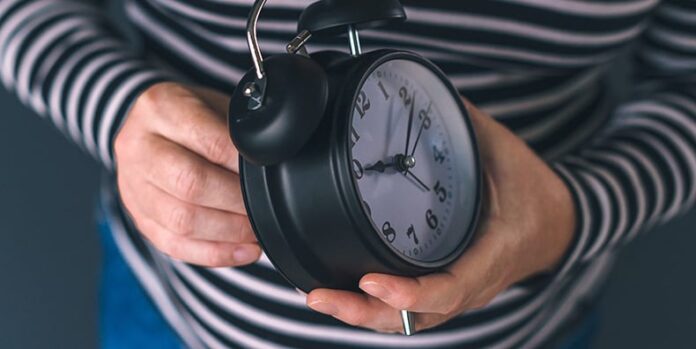
Transitions like Daylight Saving Time can disrupt sleep and raise the risk of bipolar mood shifts. Here’s how to stay steady.
Key Takeaways
- Plan for the “spring forward” transition by treating the following Monday as a recovery day to help your brain and body adjust to the shift in light-sensitive circuits.
- When traveling across time zones, allow for extra recovery days and consult your healthcare provider about short-term sleep aids to protect your mood stability.
- Proactively manage your internal clock using tools like meditation, circadian tracking apps, and a consistent sleep schedule to minimize the impact of seasonal time changes.
______________
Benjamin Franklin first mentioned what we now call Daylight Saving Time (DST) in a 1784 essay. He somewhat satirically proposed conserving candles for the early morning hours. While the United States has used DST for the past century, it has long been the focus of debate. Most people enjoy gaining an extra hour in the fall; losing an hour in the spring is much harder.
Why Do We Have Daylight Saving Time?
One early argument in favor of DST was energy conservation. The demand for electricity to light homes and power appliances is directly tied to when people go to bed at night and rise in the morning. There is a potential benefit in northern climates where sunlight varies dramatically throughout the year, but little benefit in southern ones.
Public safety is a second factor. Several studies found that DST reduces net traffic accidents and fatalities; lower evening accident rates more than offset the increase in accidents during dark mornings. Yet, accidents and fatalities increase during the week following the start of DST in the spring.
How Time Changes Affect Your Bipolar Mood
Everyone is affected by seasonal or time zone changes, but some feel the impact more than others. The spring time change — with its increased activation of light-sensitive brain circuits and a general acceleration of brain activity — is a major hurdle, particularly for those with mood challenges.
With the roller-coaster ride that spring often brings to someone with bipolar disorder, the weekend of the time change is the equivalent of a sharp turn in the track that sends the head spinning. Increases in heart attacks and disrupted sleep patterns immediately after the time change have been documented. Sleep disturbances interfere with attention, whether at home, at work, or traveling between the two. These negative effects can last for several weeks.
But there is a plus side: Extra sunlight in the mornings may help reduce depressive symptoms.
Preparing for Travel Across Time Zones
Travel is a big deal for many. In addition to the logistics and excitement of a long-awaited trip, people with bipolar often experience more intense anticipatory emotions — there is the challenge of changes in time zones. Sleep deprivation from the travel itself (airports, connections, and delays) along with a shift in time zones, can easily lead to mood destabilization.
Tips to Manage Mood Shifts During Time Changes
For the spring time change, first and foremost: Pay attention to when the transition occurs and plan for it. Consider taking a personal day the Monday following the spring time change to “chill,” read, go for a walk, or just be good to yourself. Avoiding stress and alcohol (or other substances) as much as possible.
Talk to your healthcare provider about options to manage sleep or other disruptions. You might discuss medication to use as needed or self-care strategies, such as meditation, to facilitate relaxation and sleep.
For travel across time zones and jet lag, planning is key. Allow extra time for the travel itself and build in a day or two to recover. The greater the time-zone change, the longer the recovery. Consult your healthcare provider for an as-needed sleep aid. You can also experiment with available mobile apps that monitor your body’s circadian clock to help you adjust more quickly to new time zones and schedules.
Time changes are often challenging, but with preparation and planning, they don’t need to be debilitating.
Editorial Sources and Fact-Checking
- Carey RN et al. Impact of Daylight Saving Time on Road Traffic Collision Risk: A Systematic Review. BMJ Open. July 2, 2017.
- Weingarten JA et al. Air Travel: Effects of Sleep Deprivation and Jet Lag. Chest October 2013.
- Kantermann T et al. The Human Circadian Clock’s Seasonal Adjustment Is Disrupted by Daylight Saving Time. Current Biology.
UPDATED: Originally printed as “Ask the Doctor: Time Change Challenges,” Spring 2019