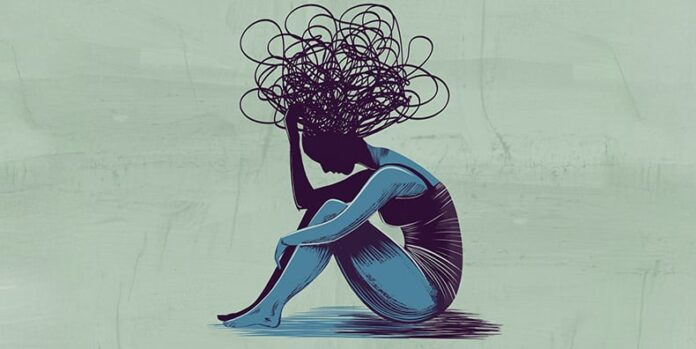
Neither pain nor bipolar can be effectively treated in isolation; the treatments for one condition invariably affect the other, for better or worse.
Thanks to a pancreatic tumor, major surgery, and migraines, along with bipolar 1 disorder, I’ve become quite the expert in all things excruciating.
As such, I’m confident that the distinctions we often draw between physical and psychological pain are, at best, fuzzy, and at worst, imaginary.
For the brain is, indeed — wait for it! — part of the body, not to mention the chief interpreter of pain and mood. Thus, it’s little wonder that pain affects mood and vice versa.
The Connection Between Bipolar Depression and Pain
I know, from years of experience, that I’m far more likely to suffer from depression when I’m in pain, and far more likely to suffer from physical pain when I’m depressed.
Of course, this makes for a classic chicken-and-egg dilemma: Which came first — the depression or the pain?
As is so often the case with the brain, it turns out that the most reasonable answer here is also the most exasperating — both, and neither.
In other words, sometimes it’s the pain, sometimes it’s the depression, and sometimes we just can’t tell.
RELATED: How Chronic Pain Affects Your Bipolar Moods
To further complicate matters, plenty of other factors play into our experiences of pain and depression, aside from pain and depression: diet, exercise, and medication, just to name a few.
Still, there’s no denying that, for many of us, pain and bipolar disorder seem to love traveling as a team. And while I’ve yet to find a way to divorce the two, I have found a variety of ways to cope with both. Here are a few examples of what works for me.
4 Ways to Cope With Pain and Bipolar Depression
Living with both pain and bipolar depression can feel overwhelming, but there are practical approaches that can bring real relief and hope. Here are four strategies that have made a difference for me.
1. Diet, Exercise, and Medication
Yes, I just mentioned these as factors that can potentially complicate matters, and indeed they can. But when dealt with appropriately — working with our healthcare providers and support systems to build better diet, exercise, and medication regimens — these same factors can be helpful, instead of exacerbate, our pain and depression.
For example, keeping a food diary to identify triggers, and removing certain foods from my diet, has helped me reduce migraine and gastrointestinal pain, not to mention the depression that so often seems to accompany both.
2. Talk Therapy
Once we grow accustomed to one specific approach, it’s easy to forget how many different forms of talk therapy exist.
I’m most familiar with cognitive behavioral therapy (CBT), which I’ve found highly helpful for depression. But, several years ago, during an extended bout of chronic pain that lasted roughly two years — and for which CBT wasn’t especially helpful — I was introduced to self-hypnosis.
With practice, it has become one of the most reliable treatments I’ve found for pain, chronic and otherwise. And while pain control was my primary motive for learning self-hypnosis, I soon found that it also helped stabilize my mood by giving me tools to better regulate my sleep.
3. The Power of Touch
Whether it’s a hug, a handhold, or a massage, touch works wonders. Research shows that it can boost serotonin, oxytocin, and dopamine, while reducing cortisol levels, thereby easing depression and anxiety, and diminishing our perception of pain.
Honestly, I’m not a super touchy-feely person, but upon learning more about the science supporting the power of touch to improve our mood and reduce pain, I started making an active effort to hug my husband more — and it helps.
RELATED: 6 Simple Strategies for Stress Relief and Mood Balance in Bipolar
I’ve also added massage to my self-care regimen — something I once considered a trivial luxury — and it, too, has helped. Until recently, I had no idea that some health insurance companies partially cover or reimburse massage treatments, but, given the health benefits, it makes sense.
4. Patience Over Immediate Solutions
While the strategies above have helped me manage bipolar and pain, it’s worth noting that none have been an instant remedy. After all, there is no one-size-fits-all solution to coping with concurrent pain and bipolar.
If there is a “trick” to any of this, it is simply patience and the recognition that neither condition can be effectively treated in isolation, as the treatments for one invariably affect the other, for better or worse.
The moment we recognize this, however, we can become better advocates for ourselves and work toward building treatment plans that work best for us as whole human beings, not just as mere collections of diagnoses.
Editorial Sources and Fact-Checking:
- Marsolek A. Can Massage Relieve Symptoms of Depression, Anxiety, and Stress? Mayo Clinic Health System. July 20, 2022.
- Eckstein M et al. Calming Effects of Touch in Human, Animal, and Robotic Interaction — Scientific State-of-the-Art and Technical Advances. Frontiers in Psychiatry. November 4, 2020.
UPDATED: Printed as “When Pain & Bipolar Travel as a Team,” Fall 2017