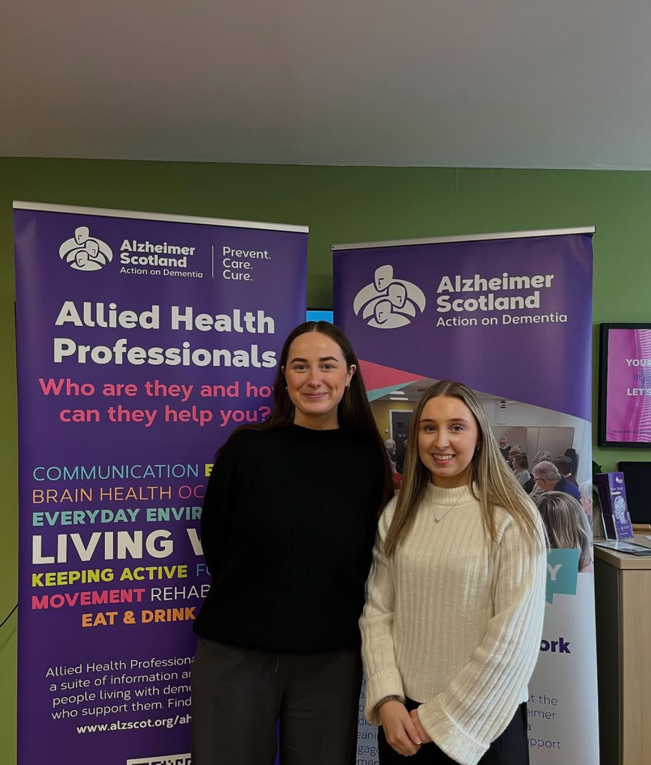
As occupational therapy students from Queen Margaret University, one of the most eye-opening aspects of our placement at Alzheimer Scotland, has been gaining a deeper understanding of the vital role carers play in supporting individuals living with long-term conditions such as dementia. Throughout our placement, we’ve had the privilege of working closely with members of the National Dementia Carers Action Network (NDCAN), gaining valuable insight into the lived experiences of family carers. As part of writing this blog, we had the opportunity to meet individually with one NDCAN member, who generously shared their personal journey. They spoke not only about their experiences as a carer but also about the inspiring work they’ve gone on to do—both through their own website and in collaboration with speech and language therapy students.
Carers—whether formal, like paid professionals, or informal, such as family members—are often the backbone of the care system. They provide continuous support, advocate for their loved ones, and bridge the gap between healthcare services and the day-to-day realities of life at home. This role is multifaceted, emotionally demanding, and deeply personal—especially when it evolves from an existing family relationship.
Many carers do not initially see themselves as such. More often, it is a gradual transition: one moment they are a spouse, child, or sibling, and the next, they find themselves managing medications, coordinating appointments, assisting with daily routines, and navigating a complex health and social care landscape. This shift can feel abrupt and isolating, as personal identities begin to merge with caregiving responsibilities. For many, there is no formal training or clear roadmap—just a deep sense of duty and love for the person they are supporting.
What is often overlooked is the immense resilience required to take on this role, particularly in the face of emotional strain, financial pressure, and social withdrawal. Carers are not simply helpers; they are advocates, decision-makers, problem-solvers, and sources of emotional strength. Their contribution is essential to the well-being and quality of life of those they care for, yet it often comes at the expense of their own mental and physical health.
From an occupational therapy perspective, understanding the lived experiences of carers is crucial. It encourages us to take a holistic view of care—not only focusing on the individual with the diagnosis, but also on the person supporting them. Carers are not just part of the care team; they are often the one consistent figure throughout the journey, holding everything together. As occupational therapy students, we are learning to see carers not only as a resource but as individuals in need of support, validation, and meaningful collaboration in care planning. Their knowledge of routines, habits, and preferences is invaluable, and our role includes listening to, empowering, and advocating for them as much as for the people they care for.
Throughout our placement, we’ve had the privilege of working closely with members of the National Dementia Carers Action Network (NDCAN), gaining valuable insight into the lived experiences of family carers. As part of writing this blog, we had the opportunity to meet individually with one NDCAN member, who generously shared their personal journey. They spoke not only about their experiences as a carer but also about the inspiring work they’ve gone on to do—both through their own website and in collaboration with speech and language therapy students.
One of the most powerful messages that emerged from our conversation was the difficult decision many family carers face when choosing to provide care at home, often to avoid the high costs associated with care homes. This choice frequently means putting personal goals, careers, and well-being on hold—a sacrifice that deserves far more recognition than it currently receives. Despite their efforts, many carers report feeling like they are not doing enough. Our NDCAN contact shared a written piece they had produced on the theme of “feeling like a failure” as a family carer. The emotional toll of watching a loved one change, combined with the weight of day-to-day responsibilities, can easily lead to burnout and self-doubt.
This is where Allied Health Professionals (AHPs) can play a vital role. Our NDCAN contact spoke openly about how much it means for carers to simply hear, “You’re doing a good job.” Acknowledgment, encouragement, and emotional support from AHPs can make a profound difference. Even small affirmations can help carers feel seen, valued, and supported. As AHPs, how can you create an environment in your practice that recognises and validates the experiences of those in caring roles?
Our conversation also highlighted a widespread lack of awareness about the support and services available through AHPs—especially in the early stages of someone becoming a carer. We discussed how early intervention and guidance from AHPs could significantly improve the caregiving experience. It’s not just about managing practical tasks; it’s also about knowing someone is there to provide reassurance and help when needed.
So how can Allied Health Professionals support family carers?
A key takeaway from our discussion was the importance of open, ongoing communication between carers and healthcare professionals. While AHPs bring clinical expertise, carers bring a wealth of personal knowledge—understanding the habits, preferences, and daily realities of the person they support. When these perspectives are brought together, care becomes more effective and person-centred.
AHPs can offer practical, accessible advice that makes a real difference in a carer’s day-to-day life. Whether it’s tips for safe mobility, strategies for effective communication, or suggestions on how to adapt routines and environments, these insights can empower carers and improve quality of life for everyone involved. We know the AHPS have developed a suite of AHP self-management information; however, we wondered how many carers were aware of these evidence-based resources.
As current occupational therapy students, and soon to be new occupational therapists, this experience has been incredibly insightful—not only in learning what carers feel and need from healthcare professionals, but also in understanding the importance of continuing to advocate for our role. We must actively explore ways to raise awareness so that carers know where to turn for support and how we, as future Allied Health Professionals, can be part of their journey.
Thank you for taking the time to read our blog. A special thank you to the NDCAN member who met with us and helped shape the direction of this blog. We also want to thank the other NDCAN members who have shared valuable insights into their experiences as carers over the past 10 weeks of our placement. Your input has been important in helping us understand the everyday realities of caring and the work you are involved in.
Contributors: Emma Wall and Hannah Moore, Occupational Therapy students at Queen Margaret University, Edinburgh.
