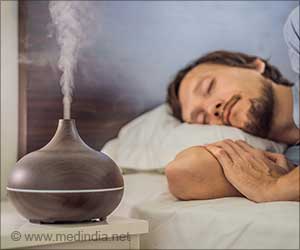
Even flame-free fragranced products like wax melts emit harmful nanoparticles that can penetrate deep into the lungs and cause systemic health effects.
- Flame-free fragranced products emit nanoparticles that contribute to indoor air pollution
- Nanoparticles’ exposure is linked to respiratory, cardiovascular, and neurological damage
- Lack of ingredient transparency increases unintentional exposure in everyday settings
Fragranced consumer products emit volatile organic compounds that lead to the formation of secondary pollutants like formaldehyde, significantly increasing the risk of health issues such as migraine headaches, asthma attacks, respiratory problems, skin conditions, and neurological symptoms (1✔ ✔Trusted Source
Flame-Free Candles Are Not Pollution-Free: Scented Wax Melts as a Significant Source of Atmospheric Nanoparticles
Go to source
).
Non-combustion fragranced items, such as scented wax melts, also emit terpenes that interact with indoor ozone to form new nanoparticles. This challenges the common perception that flame-free fragranced products are safer alternatives.
Indoor Sources of Nanoparticle Pollution
Volatile organic compounds from fragranced products, including monoterpenes in wax melts, quickly react with indoor ozone to create highly oxygenated compounds and secondary organic aerosols. These reactions initiate intense nucleation and growth of particles, which expand from sizes under 3 nanometers to hundreds of nanometers.
Nanoparticles are also released through combustion and spraying. Burning items like candles and incense generate ultrafine soot and ash, while aerosol sprays from cleaners and personal-care products leave behind droplets that evaporate into solid particles.
In indoor settings with low nitrogen oxide levels, the interaction between terpenes and ozone produces peroxy radicals. These radicals support continued nanocluster growth, resulting in particle concentrations exceeding one million particles per cubic centimeter, levels similar to those from gas stoves and combustion-based appliances.
Pathways of Exposure to Fragrance Particles
Indoor environments containing high amounts of dust, fibers, or combustion remnants are further contaminated by ultrafine particles from fragranced products and microplastics. The ability of these particles to deposit in the lungs depends on their size. Larger particles tend to get stuck in the upper airways, while smaller nanoparticles can penetrate into deeper regions like the bronchioles and alveoli.
Fragrance-related chemicals and plasticizers, including phthalates, can be absorbed through the skin when using personal care products such as cosmetics, shampoos, sunscreens, and lotions. Damaged or moist skin allows even greater penetration of solvents and nanoparticles, raising systemic exposure (2✔ ✔Trusted Source
Nanoparticles-induced potential toxicity on human health: Applications, toxicity mechanisms, and evaluation models
Go to source).
Ingestion and Transfer Risks from Household Products
Fragrance chemicals can also enter the body through ingestion when substances from packaging materials leach into food.
Particles from volatile organic compounds and phthalates that settle on household surfaces can lead to accidental intake via hand-to-mouth actions, especially in children.
Health Consequences of Nanoparticle Exposure
Nanoparticles possess large surface areas, leading to high generation of reactive oxygen species. This results in oxidative stress, inflammation, and potential damage to deoxyribonucleic acid and histones, with elevated DNA damage markers found in polluted environments. Inhalation of these particles can severely impact lung function, particularly in individuals with asthma or chronic obstructive pulmonary disease.
Several nanoparticles can even breach the blood-brain barrier, leading to oxidative stress and potential neurodegenerative outcomes. Systemic effects occur when particles cross into the bloodstream, triggering vascular dysfunction, heart toxicity, and immune disruption. Certain materials like silica and metal oxides can worsen vascular conditions and disturb lipid metabolism.
Children, pregnant individuals, the elderly, and people with chronic illnesses are especially vulnerable to the harmful effects of nanoparticles. There is a growing need to limit exposure and improve safety evaluations to protect public health.
Transparency and Regulatory Gaps in Fragrance Safety
In the United States, manufacturers are not required to fully disclose the ingredients in fragrances. Labels list only the word “fragrance,” even though that one word can represent hundreds of chemical substances.
Hazardous volatile organic compounds are emitted from both traditional and so-called “green” fragranced products, with little difference in safety. The proprietary nature of these mixtures complicates risk evaluation, and people are often exposed second-hand in public and work environments without knowing the exact sources.
Strategies to Reduce Exposure in Indoor Settings
Efficient local exhaust systems and well-planned ventilation significantly reduce the concentration of indoor particles. Even opening windows provides some benefit, although not as much as engineered solutions.
High-efficiency particulate air filters and the use of products with lower emissions are highly effective in both homes and workplaces. In laboratory environments, sealed equipment dramatically reduces particle levels, a strategy that could be adapted to office and residential settings.
Practical Solutions for Safer Indoor Air
Administrative actions like training, labeling, planned workflows, and general cleanliness can further limit exposure. When other strategies are unavailable, fitted respirators may provide short-term protection.
As consumers become better informed about nanoparticle sources, market pressure may lead laboratories and manufacturers to develop safer products. A combination of controlling emissions at the source, improving ventilation, and making informed purchasing decisions offers a clear way forward.
Call for Improved Testing and Public Policies
There is an urgent demand for standardized methods to assess and report emissions, especially for nanoparticles and ultrafine particles. Testing should measure both original volatile organic compounds and secondary pollutants like formaldehyde under various conditions such as heating, spraying, and usage in enclosed spaces.
Advanced toxicology tools, including 3D organoid models and long-term studies, are necessary to better understand multi-organ effects and exposure thresholds.
Policy Recommendations and Ingredient Disclosures
Policymakers are urged to mandate full ingredient disclosures for fragrance compounds, regulate indoor air emissions on par with outdoor pollutants, and include fragrance chemicals in indoor air quality guidelines. Encouraging fragrance-free policies in places such as offices, hospitals, transportation, and hotels will help minimize unintentional exposures.
In conclusion, fragranced products significantly contribute to indoor nanoparticle pollution through both direct emissions and chemical reactions involving volatile organic compounds. These particles are linked to a wide range of health problems, from respiratory irritation and neurological harm to systemic inflammation.
Vulnerable populations face increased risk, yet limited regulation and ingredient transparency persist. Reducing exposure through ventilation, product substitution, and policy change remains essential for protecting public health.
References:
- Flame-Free Candles Are Not Pollution-Free: Scented Wax Melts as a Significant Source of Atmospheric Nanoparticles – (https://pubs.acs.org/doi/10.1021/acs.estlett.4c00986)
- Nanoparticles-induced potential toxicity on human health: Applications, toxicity mechanisms, and evaluation models – (https://onlinelibrary.wiley.com/doi/10.1002/mco2.327)
Source-Medindia