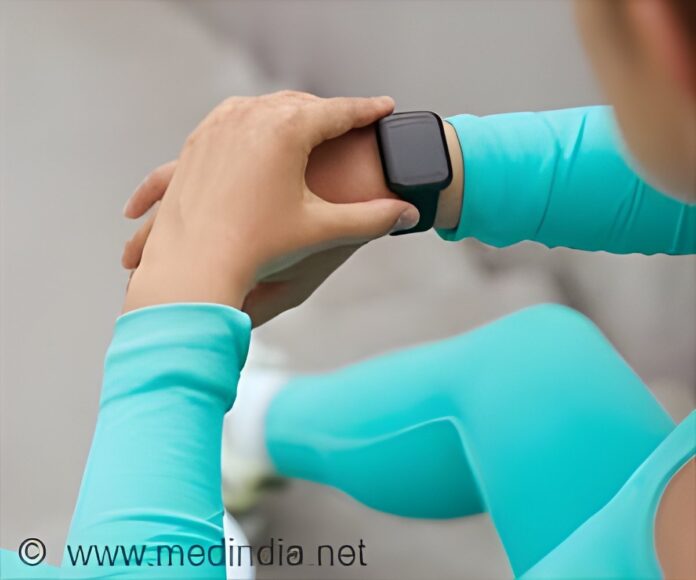
From fitness tracker to health monitor- the Apple Watch can now flag hidden hypertension before it harms your heart.
- The Apple Watch’s new HTNF algorithm now has FDA clearance to issue notifications when it detects patterns suggestive of hypertension
- Over a 30-day monitoring period, it uses optical sensor data and machine learning to generate alerts- not direct blood pressure readings
- The feature is a screening tool, not a diagnostic tool; users should confirm with standard cuff measurements and medical consultation
High blood pressure, often called the “silent killer”, affects millions globally, yet many don’t know they have it. Now, the Apple Watch might help change that. The U.S. Food and Drug Administration (FDA) has cleared a new Apple Watch algorithm that passively monitors vascular signals over time and alerts users if it detects possible hypertension (1). This novel feature promises to bring blood pressure awareness to your wrist.
How the Apple Watch Hypertension Algorithm Works
Unlike a blood pressure cuff, the new feature doesn’t directly measure your systolic and diastolic pressure. Instead, it uses the watch’s optical heart sensor and analyzes how your blood vessels respond to each heartbeat over a 30-day period. The software then looks for consistent patterns suggestive of hypertension.
This algorithm is called the Hypertension Notification Feature (HTNF). It operates in the background, passively collecting data without user input. If the watch identifies a hypertension‐like pattern, it sends a notification suggesting you get your blood pressure checked with a standard cuff device.
Apple plans to roll it out to Apple Watch Series 9, 10, 11 and Ultra versions 2 & 3, across more than 150 countries.
Early Detection of Silent Hypertension
Hypertension is notorious for being asymptomatic- many people live with it unaware until it causes damage to the heart, kidneys, or brain. According to the CDC, nearly half of U.S. adults have high blood pressure, but only one in four has it under control.
By offering a long-term, passive monitoring tool, the Apple Watch gives people a chance to catch rising blood pressure early- before irreversible damage sets in. While the feature doesn’t replace clinical diagnosis, it creates a “red flag” that can prompt further testing or medical evaluation.
This kind of wearable health innovation brings medical insight into daily life, bridging the gap between occasional doctor visits and continuous health awareness.
Clinical Performance and Limits of Apple Watch
According to Apple’s FDA submission (a 510(k) summary), the HTNF feature was validated in a clinical study with 2,229 participants without known hypertension (2).
Of those, 1,863 provided adequate usable data over 15+ days for analysis. The results showed sensitivity of about 41.2% (i.e. correctly identifying true positives) and specificity of around 92.3% (i.e. correctly identifying true negatives).
In simpler terms, the algorithm is better at ruling out hypertension (when no alert is triggered) than it is at catching every case. Apple and regulators are clear: a notification does not guarantee you have high blood pressure, and an absence of notification does not confirm you’re in the clear. The feature is meant to aid awareness, not to replace standard tools.
It’s also not intended to monitor treatment response, track blood pressure trends, or be used during pregnancy.
How to Use Apple Watch Responsibly?
- If you receive an alert, the recommended next step is to measure your blood pressure for seven days using a validated cuff, then bring those readings to your doctor. That approach aligns with hypertension guidelines.
- Understand that wearables, even advanced algorithms, are not perfect. They can miss high blood pressure cases or produce false alerts.
- Keep in mind that only FDA-cleared or approved devices should be used for health decisions. The FDA has recently warned against unauthorized blood pressure devices on the market, noting risks of misdiagnosis.
- Use the watch feature as a complement, not a substitution, for regular checkups, lifestyle changes, and physician guidance.
Broader Implications for Healthcare and Wearable Tech
This FDA clearance marks a turning point. It signals that wearable devices are no longer just fitness trackers—they’re stepping into clinical territory. Health systems, insurers, and clinicians may increasingly lean on real-world data from consumer devices to stratify risk, improve patient engagement, and shift prevention upstream.
Still, this evolution must be handled with care. Issues like data privacy, algorithm bias, and digital health equity will need continued scrutiny.
References:
- Introducing apple watch ultra 3
(https://www.apple.com/newsroom/2025/09/introducing-apple-watch-ultra-3/) - (https://www.accessdata.fda.gov/cdrh_docs/pdf25/K250507.pdf?)
Source-Medindia