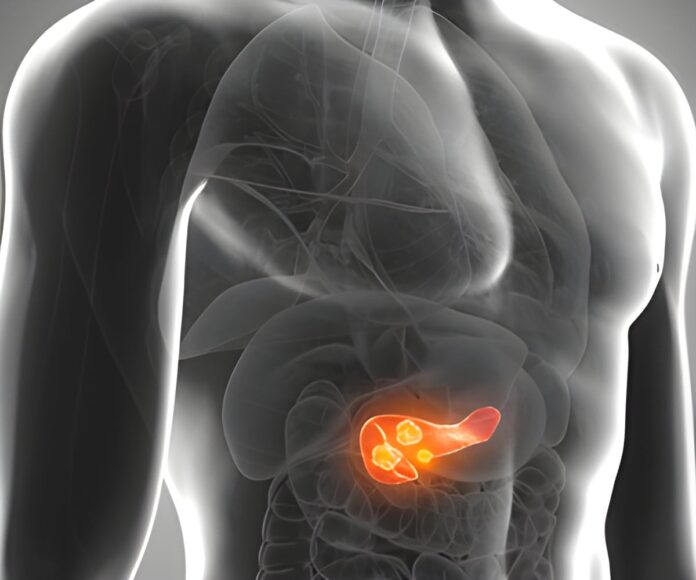
Pancreatic cancer remains the deadliest cancer due to late diagnosis and poor CT visibility, leaving just 10% alive at five years.
Pancreatic cancer is the most lethal cancer globally because it is typically diagnosed at a late stage.
The symptoms linked to these tumors are often vague, meaning neither patients nor clinicians immediately consider
Diagnostics for pancreatic cancer improve with the help of AI
Go to source
)
TOP INSIGHT

Did You Know?
Up to 30% of early #pancreatic_cancers slip past routine #CT_scans, tiny tumors blend in and vanish to the human eye. But #AI can spot the tumors’ microscopic fingerprints years before they appear on scans.
#cancerdetection #medicalimaging #earlydiagnosis #radiology #medindia
Building a Robust AI Benchmark for Pancreatic Cancer Detection
AI researcher Henkjan Huisman and radiologist John Hermans explored ways to improve diagnostics using AI. They created a reliable benchmark: a confidential dataset of scans from nearly 400 patients from Western countries, assessed by a large group of international experts. They then invited developers worldwide to submit AI models capable of detecting pancreatic cancer. More than 250 models were submitted, ranked, and compared to experts.
The researchers tested these models on the confidential dataset and found that the best AI models detected pancreatic cancer more accurately than the average radiologist. For example, the AI system produced 38% fewer false positives compared to the group of radiologists. AI made the correct assessment in 92% of scans, versus 88% for the radiologists.
AI Performance, Clinical Promise, and Current Limitations
These results show that AI can at least support radiologists in their work and, in the long run, help reduce their workload. The developed AI still needs validation and is not yet available for patients in clinical practice. But these are important developments, emphasizes lead researcher Henkjan Huisman: “Precisely because we have developed a reliable benchmark, we know that the AI systems outperforming clinicians are truly effective.”
The best AI model may also offer opportunities for earlier diagnosis. Radiologist John Hermans explains: “In the study, we see initial indications that this AI model could really help achieve faster diagnosis and, therefore, potentially faster treatment. This is a small ray of hope, something we urgently need for this type of cancer.”
Future Development and Need for Broader Training Data
However, Hermans stresses that it is still too early to use AI directly for early diagnostics: “We must avoid false positives for this disease, given the unnecessary strain on healthcare and, especially, the anxiety such suspicions cause for patients.”
Reference:
- Diagnostics for pancreatic cancer improve with the help of AI – (https://ecancer.org/en/news/27308-diagnostics-for-pancreatic-cancer-improve-with-the-help-of-ai)
Source-Radboud University Medical Center