Hello, my name is Millie, and I am in my second year of the MSc Art Psychotherapy programme at Queen Margaret University. I have the privilege of being a student Art therapist on placement with Alzheimer Scotland for six months. As an Allied Health Professional student, I am part of a wider team supporting people living with dementia in the community. My role involves offering art therapy within a day service setting. In this blog, I’d like to share a little about my role and what a typical day can look like!
Arriving and Preparing Space
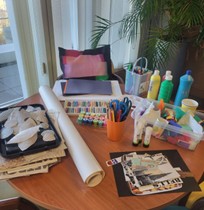
A big part of art therapy happens before anyone enters the room. I prepare materials, paper, paints, clay, drawing tools, and arrange the space to feel welcoming and safe: not too many materials to overwhelm, but enough to allow opportunity for choice. Having the same room at the same time each week helps create a sense of structure and predictability. In shared settings, I’ve noticed how important it is to gently “mark out” the therapeutic space. Something as simple as a consistent tablecloth or a sign on the door can help signal that this time and space is different, and an art therapy session is about to take place. Art therapy isn’t an art class, and there’s no expectation to produce a finished piece. The materials are there as tools for expression.

Beginning the Session
Sessions may begin with a simple check-in activity. For example, a box of coloured stones can be used, inviting people to choose one to accompany a word or feeling. It’s a quiet way of arriving together and noticing what we are bringing into the room. This gentle ritual often helps build trust and a sense of safety right from the start, allowing everyone to settle into the space at their own pace. By holding something weighty yet colourful, it provides a gentle sense of presence, grounding the person in the here and now through touch and colour. At Alzheimer Scotland I facilitate both individual and group sessions, creating a contained space for exploring thoughts and feelings through art-making.

The Session – The Creative Process
The art therapy sessions take place for around 60 minutes. During the session, people choose how they would like to work. Some may paint or draw; others may sit quietly with materials before deciding what feels right. There is no ‘right’ or ‘wrong’ way to connect with art. For people living with dementia, creativity can remain a meaningful way of connecting. Sensory engagement with colour, texture and movement can support attention and wellbeing. Art can also offer a way of expressing parts of ourselves that are harder to put into words.
Holding the Boundaries
An important part of my role is maintaining therapeutic boundaries. This includes:
- Consistent structure
- Ensuring confidentiality
- Safely storing artwork
- Receiving regular supervision

After the Session – Reflection
I take time after each session for my own quiet reflections, perhaps jotting down notes on what emerged in the artwork or interactions, or sitting with my thoughts to process the session. This personal pause supports my learning and helps me stay attuned to the experience.
As an art psychotherapy student, I also engage in regular profession-specific supervision alongside support from the Alzheimer Scotland team. This helps ensure safe, ethical practice. In supervision, I have a dedicated space to reflect deeply on each session with another professional, think about the artwork created and the interactions that unfold, and explore how best to respond in ways that honour each person’s unique experiences, strengths, and ways of being. This ongoing support helps me stay adaptable and fully focused on creating a nurturing therapeutic environment.
Working as Part of a Wider Team
Art therapy does not happen in isolation. I collaborate with daycare practitioners, coordinators, and other Allied Health Professionals. Alzheimer Scotland’s services are shaped by collaborative working and by the voices of people living with dementia, ensuring art therapy fits within a holistic and tailored approach to care and wellbeing.

Why This Role Matters to Me
As an art psychotherapy student, this placement has shown me how creativity and therapeutic support can sit alongside everyday community provision. It has reinforced the importance of creating spaces where people feel seen and heard and responding moment-to-moment to whatever emerges.
Thank you for reading! I would love to hear your thoughts.
- Have you seen creativity play a role in wellbeing?
- What questions do you have about art therapy?
Contributor. Millie Davies, 2nd year art psychotherapy student, Queen Margaret University

Want to find out more about art therapy and dementia? Look at BAAT – the British Association for Art Therapists: https://baat.org/art-therapy/what-is-art-therapy/ and https://www.careuk.com/help-advice/art-therapy-and-dementia
Enjoyed this blog? Tell us more. We love feedback.
Please spend 1 minute completing this short anonymous feedback form to allow us to make our blog posts even better in 2026. Thank you
AHP Let’s Talk About Dementia Blog Feedback Form – Fill out form