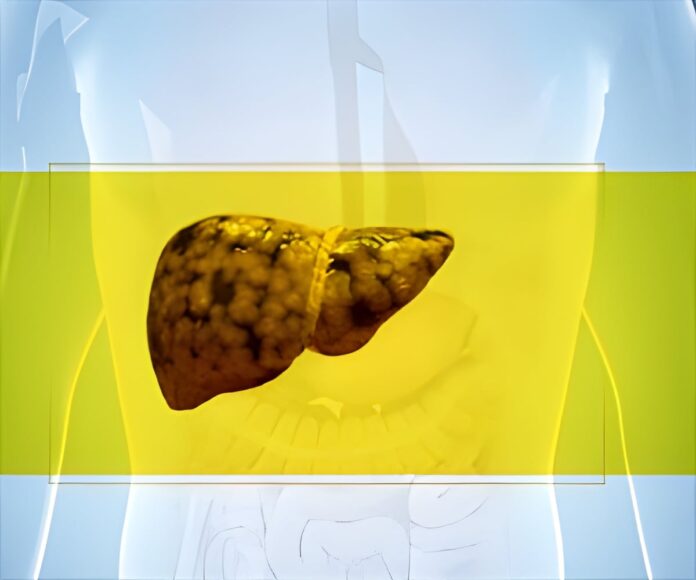
Metabolic liver disease and alcohol exposure may raise heart failure (HF) risk in aging adults with atrial fibrillation (AFib).
Atrial fibrillation (AFib), the most common cardiac arrhythmia worldwide, affects more than 64 million people globally and is a leading cause of heart failure (HF).
Steatotic Liver Disease (SLD): The Silent Fatty Liver Threat
Steatotic liver disease (SLD) encompasses a spectrum of liver disorders characterized by excessive fat accumulation in the liver, including metabolic dysfunction-associated SLD (MASLD) , MASLD with increased alcohol intake (MetALD), and
Does Coexistence of Steatotic Liver Disease Increase Heart Failure Risk?
To address this, a team of researchers from Korea University, comprising Ms. Jeongin Lee and Mr. Sangwook Cheon, led by Professor Seogsong Jeong, conducted a nationwide study and analyzed health data from 7,543 adults aged 60 and older with AFib who were followed for about 9 years to investigate whether the coexistence of SLD and its subtypes further increases the risk of HF.
Their findings are available in the European Journal of Heart Failure in 2026. The researchers found that individuals with any SLD subtype had a higher risk of developing HF compared to those without the condition. The risk followed a graded pattern, with the lowest risk observed for MASLD, intermediate risk for MetALD, and highest risk for ALD, suggesting an additive effect of metabolic and alcohol-related hepatic injury on cardiac vulnerability (1✔ ✔Trusted Source
Coexistence of atrial fibrillation and metabolic dysfunction-associated steatotic liver disease as a high-risk overlap for incident heart failure in older adults
Go to source).
Liver–Heart Connection: Why Fatty Liver Matters in AFib
The study also identified dose–response relationships across fatty liver index, alcohol intake, and fasting serum glucose, indicating that metabolic and alcohol-related liver dysfunction jointly elevate HF risk in older adults with AFib. Prof. Jeong explained, “
When the Liver Struggles, the Heart Pays the Price
These findings point to the growing importance of the “liver–heart axis,” a concept gaining attention among researchers studying how liver metabolism, inflammation, and fat accumulation can influence cardiovascular disease. Increasing evidence suggests that metabolic dysfunction can contribute to systemic inflammation, vascular stress, and cardiac remodeling—processes that may worsen outcomes in people living with AFib.
Is Liver Health the Missing Piece in Preventing Heart Failure in AFib Patients?
Overall, the study shows that liver health may be an underestimated but crucial determinant of HF risk in older adults with AFib. Given the growing prevalence of conditions such as
In the future, incorporating liver-metabolic markers such as MASLD into cardiovascular risk scores could help doctors identify high-risk patients earlier. “Early detection and management of liver–metabolic dysfunction may help reduce the risk of HF in patients with AFib,” concluded Prof. Jeong.
This could allow for closer monitoring and targeted preventive strategies, including lifestyle interventions related to
Reference:
- Coexistence of atrial fibrillation and metabolic dysfunction-associated steatotic liver disease as a high-risk overlap for incident heart failure in older adults – (https://academic.oup.com/eurjhf/advance-article-abstract/doi/10.1093/ejhf/xuag036/8471673)
Source-Eurekalert