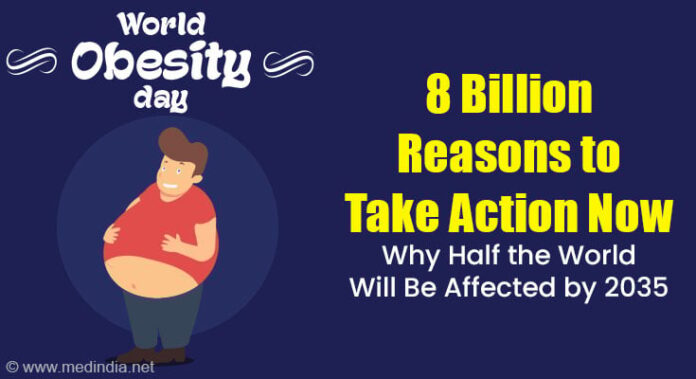
Projecting 4 billion affected by 2035, World Obesity Day 2026 calls for 8 billion people to act, shifting from stigma to systemic solutions for a healthier future.
- Half the world’s population is projected to be living with overweight or obesity by 2035
- Childhood obesity rates have increased nearly fivefold among school-aged children since 1975
- World Obesity Day 2026 theme calls on all 8 billion people to act for systemic change
World Obesity Day 2026 will be observed on March 4, continuing a global movement to address obesity as one of the most urgent health challenges of our time (1✔ ✔Trusted Source
8 Billion Reasons To Act on Obesity
Go to source
).
Established in 2015 by the World Obesity Federation, the day was created in response to rising obesity rates and the growing recognition that obesity is far more complex than simply gaining weight.
In 2020, the observance was moved from October 11 to March 4 to align with wider global health initiatives and strengthen its impact.
Theme 2026: 8 Billion Reasons to Act
This year’s theme, “8 Billion Reasons to Act on Obesity,” carries a powerful message. With more than eight billion people on the planet, every single person has a stake in building healthier systems.
The theme reminds us that obesity is not just an individual issue, it is a global, systemic challenge shaped by food systems, urban design, economic inequalities, access to healthcare, education, and social environments.
Obesity as a Chronic Disease
Obesity is a chronic disease influenced by genetics, hormones, lifestyle, mental health, and environmental factors. Across the world, nearly three billion people, including more than 400 million school-aged children, are already living with overweight or obesity.
By 2035, that number is projected to reach four billion, meaning almost half of the global population could be affected.
Rising Childhood Obesity
Childhood obesity is rising at an alarming pace, especially in low- and middle-income countries. Rates among school-aged children have increased nearly fivefold since 1975.
When obesity begins early in life, it often continues into adulthood, increasing the risk of type 2 diabetes, heart disease, certain cancers, joint disorders, and mental health challenges.
Beyond Individual Responsibility
Obesity does not occur in isolation. Poverty, limited access to nutritious food, lack of safe spaces for physical activity, stigma, and unequal healthcare systems all contribute to the problem.
Many people still view obesity as a cosmetic concern, but in reality, it is a serious medical condition that affects physical, emotional, and social well-being.
Shifting from Blame to Collective Action
World Obesity Day 2026 shifts the conversation from blame to understanding. Instead of pointing fingers at individuals, the campaign calls for collective responsibility. Policymakers are urged to design supportive food policies.
Healthcare professionals are encouraged to promote early diagnosis and equitable treatment. Communities are asked to create environments where healthy choices are accessible and affordable for everyone.
Prevention begins early. Balanced nutrition, regular physical activity, proper sleep, routine health screenings, and awareness can make a meaningful difference.
But long-term change requires stronger systems, healthcare that is accessible, schools that promote healthy habits, and policies that reduce inequality.
In conclusion, World Obesity Day 2026 serves as a critical reminder that obesity is a complex chronic disease requiring urgent global attention. With the theme “8 Billion Reasons to Act on Obesity,” the focus is on shifting from individual blame to systemic solutions, prioritizing prevention from childhood, and ensuring equitable access to care for all.
Frequently Asked Questions
Q: When is World Obesity Day observed?
A: World Obesity Day is celebrated every year on March 4 to raise awareness about obesity and prevention.
Q: What is the theme for World Obesity Day 2026?
A: The theme is “Eight Billion Reasons to Act on Obesity.”
Q: Why is childhood obesity a major concern?
A: It often continues into adulthood and increases the risk of serious diseases.
Q: How is obesity diagnosed?
A: It is assessed using Body Mass Index, waist circumference, and metabolic evaluation.
Reference:
- 8 Billion Reasons To Act on Obesity – (https://www.worldobesityday.org/)
Source-Medindia