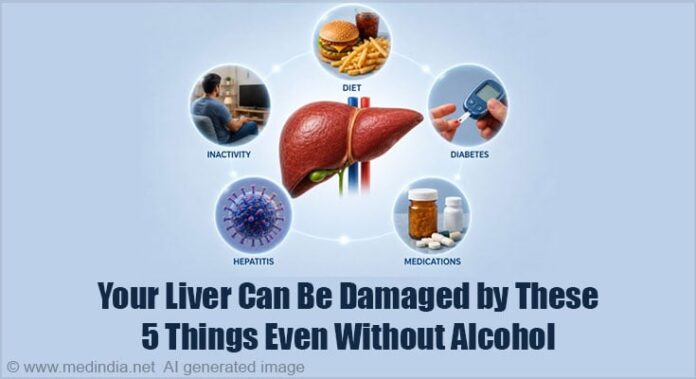
Five non-alcoholic factors including diet, diabetes, infections, inactivity, and medications contribute to fatty liver affecting up to 40% of adults.
- MASLD affects up to 40% of adults globally
- 60–70% of people with diabetes may have fatty liver
- Hepatitis B and C remain major silent causes of liver damage
Fatty liver disease is becoming increasingly common worldwide. Known as Non-Alcoholic Fatty Liver Disease (NAFLD) and now termed Metabolic Dysfunction-Associated Steatotic Liver Disease (MASLD), it affects an estimated 30% to 40% of adults globally based on large population studies (1✔ ✔Trusted Source
The Global Epidemiology of Nonalcoholic Fatty Liver Disease and Nonalcoholic Steatohepatitis Among Patients With Type 2 Diabetes
Go to source
).
It is increasingly driven by non-alcoholic factors rather than alcohol use alone. The five key contributors include poor diet and excess sugar intake, sedentary lifestyle, diabetes and metabolic syndrome, viral hepatitis B and C, and exposure to medications and toxins.
This shift is clinically important because fatty liver often develops without symptoms and can progress to fibrosis (scarring of the liver), cirrhosis, or liver cancer if not identified early (2✔ ✔Trusted Source
A new definition for metabolic dysfunction-associated fatty liver disease: An international expert consensus statement
Go to source).
Summary of 5 Non-Alcoholic Causes of Fatty Liver Disease
|
Cause |
How It Damages the Liver |
Key Risk Insight |
|
Poor diet and excess sugar |
Leads to fat buildup and inflammation |
High fructose intake linked to MASLD progression (1✔ ✔Trusted Source The Global Epidemiology of Nonalcoholic Fatty Liver Disease and Nonalcoholic Steatohepatitis Among Patients With Type 2 Diabetes Go to source , 2✔ ✔Trusted Source Go to source ) |
|
Sedentary lifestyle |
Causes abdominal fat and insulin resistance |
Physical inactivity increases fatty liver risk (2✔ ✔Trusted Source A new definition for metabolic dysfunction-associated fatty liver disease: An international expert consensus statement Go to source ) |
|
Diabetes and metabolic syndrome |
Converts excess glucose into liver fat |
Up to 60–70% diabetics may have fatty liver (1✔ ✔Trusted Source The Global Epidemiology of Nonalcoholic Fatty Liver Disease and Nonalcoholic Steatohepatitis Among Patients With Type 2 Diabetes Go to source , 3✔ ✔Trusted Source Go to source ) |
|
Viral hepatitis B and C |
Causes chronic inflammation and liver damage |
Significant burden in India and globally (4✔ ✔Trusted Source Fast pacing Indias fight against viral hepatitis targets action points Go to source , 5✔ ✔Trusted SourceViral hepatitis B and C burden of disease, WHO policy adoption status in countries, 2025 Go to source ) |
|
Medications and toxins |
Overloads detox pathways causing liver injury |
Drug induced liver injury is clinically significant (6✔ ✔Trusted Source ACG Clinical Guideline Diagnosis and management of idiosyncratic drug induced liver injury Go to source ) |
1. Poor Diet and Excess Sugar Intake Can Lead to Fat Buildup in the Liver
Diets high in refined carbohydrates, added sugars, and unhealthy fats are one of the most common causes of fatty liver disease.
When the body gets more calories than it needs, especially from sugary drinks, fried foods, and packaged snacks, it converts the excess into fat. This fat is then stored in the liver.
Over time, this leads to fat buildup in the liver and triggers inflammation, which can damage liver cells. Regular consumption of high-sugar and processed foods increases this risk significantly (3✔ ✔Trusted Source
Prevalence Of Non-Alcoholic Fatty Liver Disease In Type 2 Diabetes Mellitus Patients
Go to source).
2. Sedentary Lifestyle and Lack of Physical Activity Increase Liver Fat
A sedentary lifestyle, or not getting enough physical activity, plays a major role in liver health. When the body is inactive, it becomes less efficient at using sugar for energy.
This leads to a condition where the body cannot use sugar properly, causing excess sugar to be converted into fat and stored in the liver. In addition, increased abdominal fat further worsens liver fat accumulation (4✔ ✔Trusted Source
Fast pacing Indias fight against viral hepatitis targets action points
Go to source).
3. Diabetes and Metabolic Conditions Raise the Risk of Liver Damage
People with type 2 diabetes are at a much higher risk of developing fatty liver disease.
High blood sugar levels over time cause the liver to produce and store more fat, leading to inflammation and damage to liver cells.
A group of conditions that often occur together, including high blood pressure, high cholesterol, and diabetes, further increases the risk. These conditions can lead to scarring of the liver over time. Studies show that up to 60–70% of people with diabetes may have fatty liver.
4. Viral Hepatitis B and C Can Slowly Damage the Liver
Hepatitis B and C are viral infections that affect the liver and can remain unnoticed for years. These infections cause long-term inflammation, which gradually damages liver tissue.
Because symptoms may not appear early, many people are diagnosed only when the disease has progressed. If untreated, these infections can lead to serious complications such as severe liver scarring or liver cancer (5✔ ✔Trusted Source
Viral hepatitis B and C burden of disease, WHO policy adoption status in countries, 2025
Go to source).
5. Medications, Toxins, and Drug-Related Liver Damage
The liver helps process everything you consume, including medications, supplements, and environmental chemicals. When exposed to harmful substances in excess, the liver can become overwhelmed.
Drug-related liver damage can occur in different ways. Some people may have no symptoms but show changes in blood tests, while others may develop yellowing of the skin, liver failure, or long-term liver inflammation. The risk is higher in people taking multiple medicines or those with existing health conditions.
Early Signs of Liver Damage and When to Seek Medical Care
Liver damage often develops silently, but early symptoms may include fatigue, loss of appetite, nausea, mild abdominal discomfort, and unexplained weight changes.
More advanced signs include yellowing of the skin or eyes, dark urine, and pale stools.
People with risk factors such as diabetes, obesity, high cholesterol, or viral hepatitis should seek medical evaluation if symptoms persist (6✔ ✔Trusted Source
ACG Clinical Guideline Diagnosis and management of idiosyncratic drug induced liver injury
Go to source).
Why Early Detection of Fatty Liver Disease Matters
Fatty liver disease often develops without noticeable symptoms in early stages. Most evidence linking these causes comes from observational studies and clinical guidelines, which show strong associations but do not establish direct causation.
Early intervention through healthy diet, regular exercise, and metabolic control can help prevent progression and reduce long-term complications.
Frequently Asked Questions
Q: What is Metabolic Dysfunction-Associated Steatotic Liver Disease (MASLD)?
A: MASLD is the updated term for fatty liver disease linked to metabolic dysfunction.
Q: Can fatty liver occur without alcohol?
A: Yes, most cases are due to lifestyle and metabolic factors.
Q: Is fatty liver reversible?
A: Early stages can improve with lifestyle changes.
Q: Who should get screened for fatty liver?
A: People with diabetes, obesity, or metabolic syndrome.
Q: Why is fatty liver often detected late?
A: Because it usually has no symptoms early on.
References:
- The Global Epidemiology of Nonalcoholic Fatty Liver Disease and Nonalcoholic Steatohepatitis Among Patients With Type 2 Diabetes – (https://pubmed.ncbi.nlm.nih.gov/38521116/)
- A new definition for metabolic dysfunction-associated fatty liver disease: An international expert consensus statement – (https://pubmed.ncbi.nlm.nih.gov/32278004/)
- Prevalence Of Non-Alcoholic Fatty Liver Disease In Type 2 Diabetes Mellitus Patients – (https://www.jptcp.com/index.php/jptcp/article/view/6095)
- Fast pacing Indias fight against viral hepatitis targets action points – (https://ijmr.org.in/fast-pacing-indias-fight-against-viral-hepatitis-targets-action-points/)
- Viral hepatitis B and C burden of disease, WHO policy adoption status in countries, 2025 – (https://cdn.who.int/media/docs/default-source/hq-hiv-hepatitis-and-stis-library/2025-whd-hep-information-sheet.pdf)
- ACG Clinical Guideline Diagnosis and management of idiosyncratic drug induced liver injury – (https://pubmed.ncbi.nlm.nih.gov/33929376/)
Source-Medindia