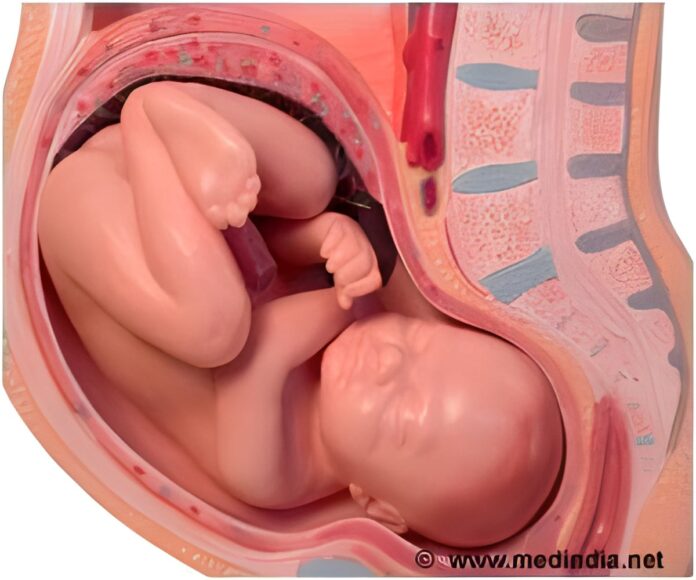
Explore the hidden conversation between mother and embryo (inside the first 14 days of development) using new 3D womb model.
The groundbreaking 3D model of womb allows scientists to listen in on the secret communication between an embryo and mother during the 14-day window after the implantation, a process hidden from view previously. (1✔ ✔Trusted Source
Modelling human embryo implantation in vitro
Go to source
)
The model was developed by researchers at the Babraham Institute and Stanford, published in the journal Cell. The bio-engineered womb (made from human tissues) responds to embryo, producing nutrients and forming other placental structures crucial for a healthy pregnancy.
By analyzing these early embryo developments, researchers are now able to spot the causes of implantation failure in IVF or infertility conditions, miscarriage, pre-eclampsia, and other early pregnancy issues.
Such a revolutionary 3D womb technology could pave the way for overcoming infertility and designing personalized treatments.
TOP INSIGHT

Did You Know?
Why #embryo_implantation fails? Physicians now have new answers from a high-tech 3D womb model that helps identify critical triggers behind #infertility, #miscarriage, #preeclampsia, and pregnancy complications, before they begin.
#IVF #infertility_journey #stemcells #biotechnology #womenshealth
Implantation is the Key to Target the Leading Cause of IVF Failure
“Understanding embryo implantation and embryo development just after implantation has significant clinical relevance as these stages are particularly prone to failure,” said Dr. Peter Rugg-Gunn, senior group leader at the Babraham Institute who led the study.
“In particular, the high rate of implantation failure represents one of the main limiting factors for IVF success.”
About one week after fertilisation, the developing embryo embeds into the womb lining (endometrium). This stage in development is one of the least understood due to the difficulty of observing the embryo during and after implantation.
Scientists Reconstructed the Human Womb Lining Using Stroma and Epithelial Cells
The new 3D model system looks to replicate the complex physiological properties and cellular composition of the endometrium. The model is built in a step-by-step process by bringing together the different components of endometrial tissue.
The team isolated two essential cell types that form endometrial tissue – epithelial cells and stromal cells – from tissue donated by healthy people who had endometrial biopsies.
As well as the cell types, the researchers sought to recreate the structure of the womb lining. Information from donated endometrial tissue was used to identify the tissue components that give the womb lining its structure.
The researchers were able to incorporate these components together with the stromal cells into a special type of gel to support the growth of the cells in a thick layer. On top of this, they added the epithelial cells, which spread out over the surface of the stromal cells.
Once assembled, this formed an advanced replica of the womb lining, matching a biopsy of endometrial tissue in terms of cellular architecture, and showing responses to hormone stimulation that indicate the engineered womb lining’s receptivity for embryo implantation.
Supporting and Witnessing Early Pregnancy Through the 3D Womb Model
The team tested their model using donated early-stage human embryos from IVF procedures, and found that the embryo – at this point a compact ball of cells – underwent the expected stages expected of adhesion and invasion into the endometrial scaffold.
Following implantation, the embryos increased secretion of human chorionic gonadotropin (hCG), a biochemical marker used in pregnancy tests to confirm pregnancy, and other pregnancy-associated proteins.
Dr. Rugg-Gunn said: “We were really excited to see that our system released essential factors that are needed to nourish the embryo in the first few weeks of pregnancy. Previous models haven’t been able to achieve this, so this represented a breakthrough for us.”
Furthermore, the system supported post-implantation development of the embryo, enabling the analysis of embryo stages (12-14 days post fertilisation) that have been largely unexplored.
The researchers observed that implanted embryos reached several developmental milestones, such as the appearance of specialist cell types in the embryo and also the establishment of precursor cell types important for the development of the placenta.
Mapping the Secret Language of Life Between Embryo and Womb
Using single cell analysis of implantation sites, the researchers were able to profile cells at the interface between the embryo and endometrium model, effectively listening in to the molecular communication between the tissues.
Their results provide new insight into the complex interactions between the embryo and endometrial environment that underpin embryo development immediately after implantation.
Dr. Irene Zorzan, co-first author of the study and postdoctoral fellow, explained the impact of the model to this field of research: “Embryo implantation and post-implantation development are crucial events normally hidden from view, and this has limited our ability to explore the cellular and molecular mechanisms underlying this critical phase.
“Now, we can witness the unexplored aspects of the earliest moments of development and uncover new insight into how the foundations of a successful pregnancy are laid”.
3D Womb Model is a Vital Tool for Predicting Pregnancy Disorders
In addition to extending our textbook understanding of development at this crucial stage, the team’s model could be used to detect differences in the endometrial response in the embryo-womb lining communication for individuals experiencing infertility issues and also to test treatments that may increase reception of the embryo by the endometrium.
Dr. Sarah Elderkin, co-first author of the study and senior research scientist, concluded: “The synchronised communications between the embryo and womb lining are essential for a healthy baby and a healthy mother.”
“Our model provides the ability for us to understand how this connection is established at implantation with implications for infertility, improving pregnancy success and early identification of pregnancy disorders. We are hugely grateful to people who donate surplus embryos to enable research like ours, without whom it wouldn’t be possible.”
Reference:
- Modelling human embryo implantation in vitro – (https://www.cell.com/cell/fulltext/S0092-8674(25)01232-2?_returnURL=https%3A%2F%2Flinkinghub.elsevier.com%2Fretrieve%2Fpii%2FS0092867425012322%3Fshowall%3Dtrue)
Source-Eurekalert