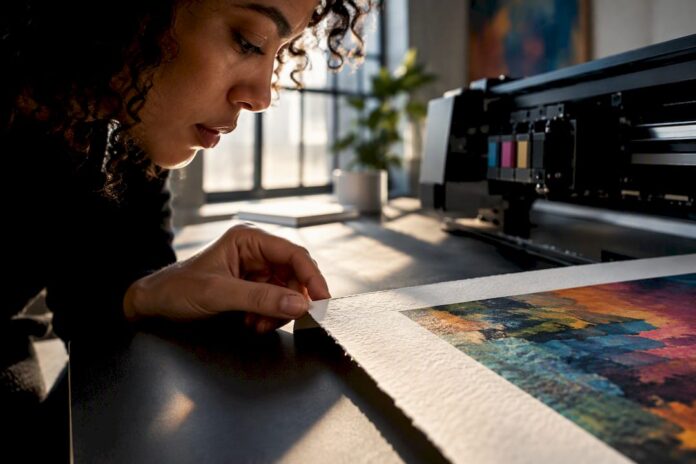
If you need archival, museum-quality reproductions, choose a documented giclée. If you want inexpensive decor, a standard art print works fine. The deciding factors come down to three things: ink type, substrate, and how long you actually want the piece to last.
TL;DR:
- Pigment inks used in giclées resist fading for decades, whereas dye inks tend to fade within a few years under normal lighting conditions.
- Genuine giclées require high-quality archival substrates like cotton rag or museum-grade paper, and a calibrated color-management process to ensure color accuracy.
- The term giclée is a marketing label rather than a certified standard, so verify ink type, substrate, proofing, and edition to confirm authenticity.
- Canvas prints add texture and are suitable for large, bold images, but lack protection against dust and humidity, unlike framed paper prints.
- For lasting quality, expect to pay more for genuine giclées, especially on archival materials, and ask for proofing or permanence ratings before purchase.
Table of Contents
Giclée vs Art Print: What Is a Giclée Print, Really?
A giclée is a specific production method, not a vibe. It means a high-resolution, multi-inkjet printer, usually running 8 to 12 colors, laying down archival pigment inks onto a museum-grade, acid-free substrate, guided by a calibrated, color-managed workflow using ICC profiles. Each piece of that chain matters.
Pigment inks are made of microscopic solid particles suspended in a carrier liquid. Dye inks are fully dissolved color that sits closer to the paper surface and breaks down faster under light exposure. That’s why a true giclée requires pigment inks rather than dye: dye-based prints can visibly fade within a few years, while pigment sets are built to resist it.
Substrate matters just as much as ink. Cotton rag paper, museum-grade cellulose stock, and archival canvas all resist yellowing and structural breakdown in ways cheap coated stock does not. ICC profiles keep color consistent between what the printer produces and what the file intended, which is why a serious print shop can proof a piece before committing ink to expensive paper.
Here’s the catch nobody tells you upfront: giclée is a marketing term. It was coined in the early 1990s as a process descriptor, not a certified industry standard with legal teeth. Anyone can print a poster on cheap stock and slap the word on the listing.
What Counts as an “Art Print,” and Why the Label Alone Means Nothing
“Art print” is a catch-all. It can mean a giclée. It can also mean a mass-produced poster, a dye-sublimation photo print, an offset lithograph run off a commercial press, or an original hand-pulled etching. Fine art print itself is a broad commercial category that includes giclées, screenprints, and traditional printmaking techniques, each with wildly different archival properties.
That range creates real tradeoffs. Offset lithographs are fast and cheap to produce at volume but lack the color depth and longevity of pigment inkjet work. Dye-based photo prints look sharp fresh out of the printer, then shift color within a couple of years under normal room light. None of that makes them bad purchases. A $15 poster for a dorm room or a rental apartment doesn’t need archival ink. It needs to look good for two years and cost almost nothing.
Giclée Art Prints vs Standard Art Prints: The Real Differences
Once you understand both categories, the comparison gets simple. Here’s what actually separates a documented giclée from a generic art print:
- Ink: Pigment inks resist fading for decades; dye inks shift color within a few years under normal light. Epson’s UltraChrome HDX pigment sets have tested to permanence ratings approaching 200 years under controlled conditions, though that number reflects lab conditions, not your living room wall.
- Substrate: Cotton rag and museum papers hold fine detail and resist yellowing; coated photo stock is cheaper but degrades faster; canvas adds texture at some cost to sharpness.
- Color management: A shop running ICC profiles and proofing prints will match your file’s colors accurately. Skip that step and you get shifted, muddy tones straight off the press.
- Longevity: Permanence claims describe accelerated aging tests under controlled light and humidity. Real walls have sun, radiators, and humidity swings, all of which shorten the practical lifespan below the lab number.
- Cost: Higher prices for genuine giclées reflect real expenses, pigment ink cartridges cost more than dye, archival paper is heavier and pricier per sheet, and profiling takes technician time. Limited editioning adds more.
Canvas vs Framed Print: Which Substrate Fits Your Space?
Canvas and paper solve different problems. Canvas carries texture well and reads as more “painterly,” which makes it a natural fit for large-scale, bold graphic work. Most canvas prints go unglazed, stretched over a wooden frame, so there’s no glass or acrylic between the ink and the room. That means no glare, but also no barrier against dust, humidity swings, or curious hands.
Paper renders finer detail and sharper lines, which matters for photography or intricate line art. It needs matting and glazing (either glass or acrylic) to survive in a normal home. Framed paper prints read as more formal, which suits a gallery wall or a piece meant to signal permanence. Canvas and paper carry distinct visual and practical tradeoffs around framing needs, texture, and how each holds up to handling.
Whichever substrate you pick, keep it off a sun-facing wall, out of bathrooms, and away from radiators or vents. Acrylic glazing weighs less and blocks more UV than standard glass, though it scratches more easily during handling.
How Do You Verify a Real Giclée Claim?
The word “giclée” by itself tells you nothing enforceable. Ask these questions before you buy, especially for anything priced as a collector piece:
- What ink is used? Pigment, specifically, not dye. Get the ink line or manufacturer name.
- What paper or canvas, and what weight? A real archival print names its substrate, cotton rag, a specific museum paper line, or archival canvas, along with gsm weight.
- Is there an ICC profile or proofing step? Sellers should be able to name the paper brand and weight and produce a proof or profile on request. If they can’t, treat the claim skeptically.
- Is there a permanence rating for that specific ink and paper pair? General claims about “archival quality” mean less than a published rating tied to the actual materials used.
- Is the piece editioned, numbered, or signed? Provenance matters more for resale and collector value than for casual decor.
Pro Tip: Before committing to a large or expensive piece, ask for a small test print on the same paper and ink combination. A five-minute proof saves you from discovering color shifts or texture issues after the big canvas ships.
Which Print Type Fits Your Actual Goal?
Match the print to what you’re actually trying to accomplish, not to the fanciest-sounding label:
- Buying for resale or a serious collection: Get a documented giclée on archival paper, framed with UV-filtering glazing and acid-free matting. Ask for provenance and edition numbers.
- A gift or short-term decor piece: A standard art print or dye-based print is a smart choice. Prioritize size and price over archival specs since it’s not built for permanence anyway.
- A large statement piece over a sofa or in an entryway: Canvas handles scale well and skips the glare and fragility of glass. If you want it to last, look specifically for giclée canvas rather than a generic large-format print.
- Working with a tight budget: Spend first on pigment ink and archival paper, since those decide how long the piece actually survives. Framing comes second. Limited editioning, nice as it is, matters least for how the print looks or lasts.
Does Printing Method Affect Environmental Impact?
Print technique carries real environmental tradeoffs that rarely make it into a product listing. Pigment inkjet printing generally uses less water than traditional offset lithography, which relies on plates, solvents, and heavier chemical processing to run large volumes. Giclée production tends to happen in smaller batches, print on demand rather than mass runs, which cuts down on overprinting and unsold inventory heading to landfills.
Paper sourcing matters too. Cotton rag and FSC-certified museum papers come from more traceable, often more sustainable fiber sources than bargain coated stock, though “archival” and “sustainably sourced” are separate claims, don’t assume one implies the other. Canvas production, particularly cotton duck canvas, has its own water and land footprint tied to cotton farming broadly.
The ink chemistry itself matters at a technical level most buyers never think about. Pigment particles are milled and dispersed differently than dissolved dyes, and that manufacturing process has its own resource inputs. Readers curious about the chemistry behind why pigment behaves so differently from dye can look at how ink formulators approach pigment dispersion at a technical level.
None of this makes one method purely “green” and the other wasteful. But a print built to last decades instead of years, on responsibly sourced paper, printed only when someone actually orders it, tends to leave a lighter footprint over its full life than a mass-produced poster destined for a landfill in two years.

Why Print Specs Matter to Us
At Schizophrenic, art isn’t decoration, it’s a conversation starter about mental illness and stigma. That only works if the piece survives long enough to keep sparking those conversations. We believe buyers deserve to know exactly what ink, what paper, what framing they’re getting, not a marketing label standing in for real specifications.
Longevity matters more when the art carries a message worth remembering. Before you buy anything advocacy-related, ask the seller what’s actually behind the word “giclée.” You can read more about how art has shaped this mission directly.
— Michelle
Where to See Specs and Shop Schizophrenic’s Prints
Our print pages provide detailed information about the substrate, framing style, and size before purchase. We carry canvas prints built for bold, large-scale display, plus Michelle’s original artwork available as signed and framed pieces for anyone who wants provenance behind their purchase.
If you’re weighing canvas against a framed paper piece or have questions about ink or substrate, check the product pages or contact the seller. Every piece we sell doubles as a conversation starter about mental illness, something worth getting right the first time. Browse the full print and artwork collection to find the piece and format that fits your space and your reason for buying.
Sources
For primary documentation beyond this guide: the Library of Congress preservation guidance on light and material damage, the Wikipedia overview of giclée printing, and World of Printmaking’s process breakdown of what genuine giclée production requires.
FAQ
Is It Worth Buying a Giclée Print?
It’s worth it if you want a piece to last decades and hold up for resale or a serious collection. For short-term decor or gifts, a standard art print costs less and serves the purpose just as well.
Do You Put Glass Over a Giclée Print?
Paper-based giclées need glazing, glass or acrylic, plus matting to protect the surface from dust, humidity, and UV exposure. Canvas giclées are typically left unglazed since the surface reads better without glare, though all light still contributes to gradual fading over time regardless of substrate.
Is It Better to Print a Giclée on Canvas or Paper?
Neither is universally better. Canvas suits large, bold, painterly pieces where texture adds to the look; paper renders finer detail and suits photography or intricate line work, but it needs framing and glazing that canvas doesn’t.
How Much Does a Giclée Print Cost?
Prices vary widely based on size, paper, ink, and editioning, so there’s no single fixed rate. Schizophrenic’s canvas prints and Michelle’s signed artwork list current pricing and format details directly on the print product pages.
Recommended
Comments