Views
By embracing their diagnosis, these public figures are using their reach to clear away stigma and champion acceptance for mental health conditions.
Whether you love them or “love to hate them,” celebrities can make a real difference, especially when they take a stand for something positive.
The following stars with bipolar disorder use their fame (and occasional notoriety) to draw our attention to what really matters, start meaningful conversations among loved ones and policymakers, break the silencing effect of social stigma, and enhance both awareness and acceptance of this brain-based disorder.
These celebrities, among others, have had a life-affirming, morale-boosting impact. Whether through a “tell-all” interview or memoir, a powerful pop song, or a moving on-screen performance, these stars continue to rally people with bipolar — and their supporters — to power through and find the hope of a new day.
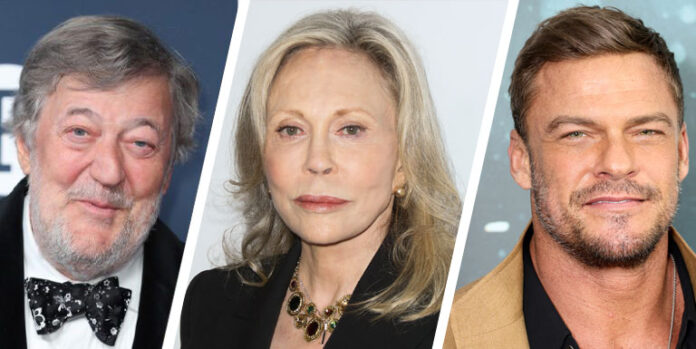
1. Faye Dunaway
In the HBO documentary Faye, the iconic Faye Dunaway, now 85, talks about her lifelong battle with mental health, including her bipolar disorder diagnosis.
“Emotion is a strength, not a weakness,” she shared with The Independent at the documentary’s premiere in Cannes in May 2024. Dunaway reflects on how her intense emotions fueled her performances but also contributed to her reputation for being difficult on set — earning her the nickname “the dreaded Dunaway” (and “Dread” for short) from Jack Nicholson during Chinatown.
In the documentary, Dunaway candidly discusses how she’s worked with doctors and taken medication to manage her mood swings. She acknowledges it’s been difficult, but “it’s something I’ve had to deal with and overcome and understand. It’s part of who I am.”
2. Alan Ritchson
You may know Alan Ritchson as the star of Prime Video’s Reacher, but did you know he also lives with bipolar disorder? Diagnosed at 36, the 43-year-old actor has been open about his struggles.
“As much as I would like to ignore that I’m a suicide survivor, if I didn’t share what I’ve learned, I feel like my life would be meaningless,” Ritchson told CBC Radio’s Q program. “I’ve always been a happy-go-lucky guy, but once you experience the grip [of depression] — the talons it can sink into you — you realize how sinister this thing is and how out of control the biology can really be.”
Ritchson, who has several tattoos, explained to The Hollywood Reporter how a tattoo of the Greek masks of comedy and tragedy represents his journey. “Tattoos, I realized, are very much an opportunity for me to tell my story and the things that matter most to me,” he said. The comedy/tragedy tattoo, he added, represents the extremes of living with bipolar and ADHD — the highs and lows he navigates daily.
“Bipolar has wreaked havoc on my life many times,” he admitted, “but it’s so much a part of who I am now that I should celebrate it a little or, at least, accept it.”
3. Maria Bello
Maria Bello, known for roles in TV shows like NCIS and movies like Coyote Ugly, is also known for something else: having bipolar disorder. The 59-year-old talks about it in the media, as well as in her book, Whatever … Love Is Love: Questioning the Labels We Give Ourselves.
She once told Entertainment Tonight, “I think that my disease, since I’m medicated, is a gift, because I’ve gone so far through extremes — from the very bottom to the very top of human emotion and feeling. … I think that I am more empathetic because of it.”
She was diagnosed with bipolar when she was 28, but believes she had it for years prior. She also thinks it’s helped her acting roles.
For the movie Lights Out, when she played a depressed and delusional mother, she said she prepared for it by living with bipolar disorder. “I was able to use my experience from that and put it on the screen for the first time, remembering what it was to be that person who couldn’t get out of bed for three months, to try to understand what it was like to be in that kind of space, not understanding what reality was,” she told the Holland Sentinel.
4. Selena Gomez
Selena Gomez is known for her authenticity, even when it comes to the life-altering experience of being diagnosed with a chronic brain-based health condition, like bipolar disorder.
In her documentary, Selena Gomez: My Mind & Me, Gomez reveals the rough, raw, and painful realities of living with a mental health condition — from tour cancellations to experiencing paranoia and severe depressive episodes. As she put it, “It’s kind of like I’m sacrificing myself a little bit for a greater purpose.”
Gomez’s manic and depressive mood swings intensified when she was in her early twenties. In an interview with Rolling Stone, she said that’s when “it started to get really dark, when I started to feel like I was not in control of what I was feeling, whether that was really great or really bad.” These episodes would last for months at a time, but nobody had yet figured out the root problem.
5. David Chang
Before becoming a world-famous chef, David Chang anxiously opened Momofuku Noodle Bar in New York City’s East Village in the early 2000s. Over the next several years, the restaurateur earned critical acclaim while managing intense pressure and undiagnosed mood disorders.
In his candid memoir, Eat a Peach, Chang opened up about his bipolar depression and how therapy and psychiatric care helped him navigate the high-stakes culinary industry.
Today, through his books, podcasts, and television projects like Dinner Time Live, Chang frequently uses his platform to destigmatize mental health challenges in high-pressure careers.
6. Maurice Benard
Emmy-winner Maurice Benard, best known for his role as Sonny Corinthos on General Hospital, is a man with a mission when it comes to reaching out and raising awareness about bipolar disorder. The actor, who was diagnosed at age 22, is in a unique position: He collaborated with the show writers to have his diagnosis written into his TV character.
“I’ve lived a productive life having bipolar,” he says. “I’ve talked to people who don’t want to talk about having it because it’s embarrassing. I’m proud of it because I know it’s made me the actor I am and the person I am.”
7. Maria Bamford
Turning her pain into art has been therapeutic for comedian and actor Maria Bamford. In 2010, she unexpectedly faced a dark period of rapid ups and downs that left her grappling with dangerous thoughts and cycling in and out of psychiatric hospitals.
The following year, she was diagnosed with bipolar. In both her stand-up routines, as well as her hit Netflix series, Lady Dynamite, Bamford normalizes topics like bipolar depression, hospitalization, and obsessive thoughts. Bamford continues to write and perform, including collaborating with her husband, Scott Marvel Cassidy — who also lives with bipolar 1 — on their graphic novella Hogbook and Lazer Eyes.
8. David Feherty
Former pro golfer — and current sports broadcaster and humorist David Feherty — had long been grappling with the symptoms and mood swings of bipolar before his official diagnosis in 2011. His efforts to become sober, and sustain sobriety, have likewise shaped him as a person and a public figure.
Feherty’s diagnosis gave him retrospective insight into his own experiences and an intense empathy for the troubles of not only friends but also strangers. Speaking of his bipolar depression, he says, it is a “hollowness inside that I wouldn’t wish on anybody.” And, in a Rolling Stone interview, referring to the daily experience of managing his condition, he says honestly, “I tell people I don’t suffer from bipolar disorder, I live with it.”
9. Mary Lambert
Singer-songwriter, poet, and spoken-word artist Mary Lambert puts it all out there in her hit “Secrets,” and she lives the same way. Whether it’s bipolar disorder, body image, or a troubled past, she’s a missionary for self-acceptance. She even sings about bipolar disorder: “I’ve got bipolar disorder / my sh—’s not in order… .”
On her steps toward self-care, she told bp Magazine, “I started working on what was necessary for me to function and feel better. I’m really grateful for that time, which is when I also stopped smoking and learned how to eat better.”
Lambert continues to champion mental health awareness and body positivity through her creative work and online workshops.
10. Stephen Fry
Comedian, actor, game-show host, radio personality, playwright, columnist, and novelist Stephen Fry has been called a “national treasure” in his native England.
His documentary, Stephen Fry: The Secret Life of a Manic Depressive, was widely praised. And in his memoir, More Fool Me, Fry continues to speak honestly and openly about living with bipolar disorder. “I want to speak out, to fight the public stigma, and to give a clearer picture of mental illness,” he writes. “Once the understanding is there, we can all stand up and not be ashamed of ourselves, then it makes the rest of the population realize that we are just like them but with something extra.”
11. Margaret Trudeau
Mental health advocate Margaret Trudeau has been in the public eye since her twenties, when she was married to the former prime minister of Canada, Pierre Trudeau. At that time, the world saw her as an adventurous free spirit (with undiagnosed bipolar).
The grandmother of seven and mother of the former Canadian PM Justin Trudeau has authored four books, including the bestseller Changing My Mind and her latest, Certain Woman of an Age.
She proudly celebrates her life and challenges with bipolar and works to inspire others and erase the stigma surrounding brain-based disorders. She once told CBC News that community support was an important source of support in terms of her living with bipolar.
12. Richard Dreyfuss
Diagnosed with bipolar disorder at age 11, Oscar-winning actor Richard Dreyfuss is vocal about turning his “manic depression” into creative mastery and seeing the “diamond in the soil” of the condition.
Dreyfuss speaks candidly about how living with the mental health condition has been good for him — how he “made it work,” as he told The Irish Times, and why stigma is “stupid.” However, his ability to harness that energy relies on proper management: After relying on self-medication for years, he transitioned to professional care, combining long-term therapy with a prescribed medical treatment routine.
13. Jane Pauley
Jane Pauley, now 75, is best known for her iconic news anchor career on The Today Show, Dateline, and CBS Sunday Morning. Diagnosed at 50, she became a prominent voice for mental health advocacy after opening up about her experience in her memoir, Skywriting. Pauley candidly shares how her diagnosis completely stripped away her sense of self before she learned to manage it, using her public platform to fight stigma and prove that recovery is possible.
“I decided that if only one good thing came out of this mess, it would be the opportunity to talk about the disease.”
Embracing a Diagnosis Is Not the Same as Romanticizing Mania
While finding personal strength or creative drive in your journey is empowering, it’s essential to distinguish genuine self-acceptance from glorifying severe symptoms. Recognizing the very real risks of untreated mania ensures that self-advocacy remains grounded in long-term stability and health.
Moving Toward Self-Acceptance After Your Own Diagnosis
Processing a diagnosis is a deeply personal journey that takes time, patience, and compassion. As you navigate your path forward, focus on integrating the diagnosis into your life without letting it limit your potential — because your bipolar disorder does not define you.
Additional reporting by Natalia Lusinski.
Editorial Sources and Fact-Checking
bpHope follows strict sourcing guidelines to ensure the accuracy of its content, as outlined in our editorial policy. We use only trustworthy sources, including peer-reviewed studies, board-certified medical experts, people with lived experience, and information from top institutions.
SOURCES +
- Macnab G. Faye Dunaway: ‘I Have, We Might as Well Say, a Bipolar Diagnosis.’ The Independent. August 4, 2024.
- Alan Ritchson on Living with Bipolar Disorder. CBC Radio. February 27, 2024.
- Gardner C. Alan Ritchson Opens Up About Bipolar Diagnosis and Mental Health Journey. The Hollywood Reporter. April 3, 2024.
- Maria Bello Talks Coming Out to Her Son and Battling Bipolar Disorder. Entertainment Tonight. April 2015.
- Symkus E. Maria Bello takes some time for horror in ‘Lights Out.’ The Holland Sentinel. July 18, 2016.
- Aleksha K et al. Selena Gomez: My Mind & Me. Apple TV+. November 4, 2022.
- Hiatt B. Selena Gomez on Mental Health, Bipolar Diagnosis, and Living Truthfully. Rolling Stone. November 3, 2022.
- Chang D. Eat a Peach: A Memoir. Clarkson Potter. September 8, 2020.
- Bamford M et al. Hogbook and Lazer Eyes. Fantagraphics. June 6, 2023.
- Bonner S. David Feherty’s Charmed Life: Golf’s Iconoclast Comes Clean. Rolling Stone. April 2015.
- Menze J. Mary Lambert: ‘I Want to Be a Catalyst for Someone’s Healing.’ Billboard. September 30, 2014.
- Stephen Fry: The Secret Life of a Manic Depressive. IMDB.
- Margaret Trudeau Says Community Support Helped Her Live with Bipolar Disorder. CBC News. December 4, 2013.
- Richard Dreyfuss: “I Made Manic Depression Work for Me.” The Irish Times. June 19, 2020.
UPDATED: Originally posted March 11, 2016